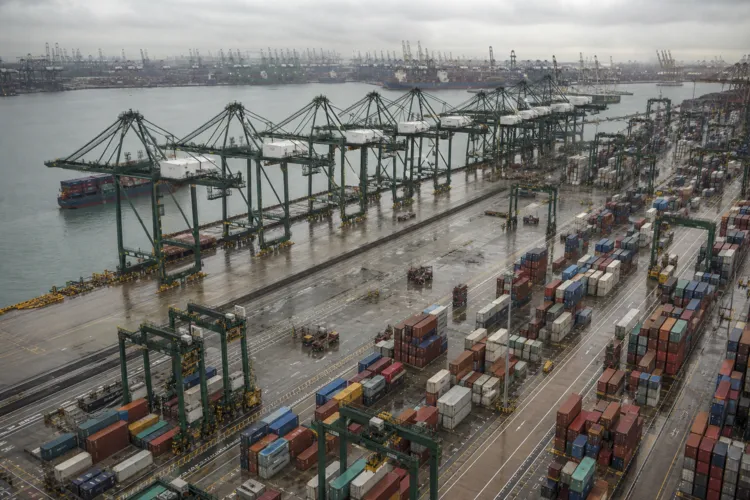

Singapore’s bunkering pull in 2026 is best explained by one word: reliability. Middle East disruptions have forced schedule changes, and Singapore sits at the intersection of the Asia-Europe, transpacific and intra-Asian shipping routes. That positioning helped lift vessel arrivals even when trade patterns became less predictable. In August 2026, 11,631 vessels arrived in Singapore, up 4% year on year, even as ships adjusted to conflict-linked disruption around the Strait of Hormuz and wider regional instability. Ships called for many reasons, including cargo, supplies, repairs and refuelling, keeping Singapore in the decision set even when bunker volumes were uneven.
The bunker market itself has been volatile. Singapore supplied about 57 million tonnes of marine fuel in 2025, and another source puts 2025 total bunker sales at 56.2 million mt, a 3.2% increase on the previous record. Early 2026 continued with strong momentum in some months, with February sales reaching 4.61 million mt, up 12% year on year. But as the conflict escalated after February 28, the market shifted from price focus to access concerns. By April, Singapore bunker sales fell 8.7% month on month to 4.4 million mt, followed by May easing to 4.5 million mt, showing that more ship calls do not automatically translate into more fuel lifted.
Why Volumes Can Fall Even When Ship Calls Rise
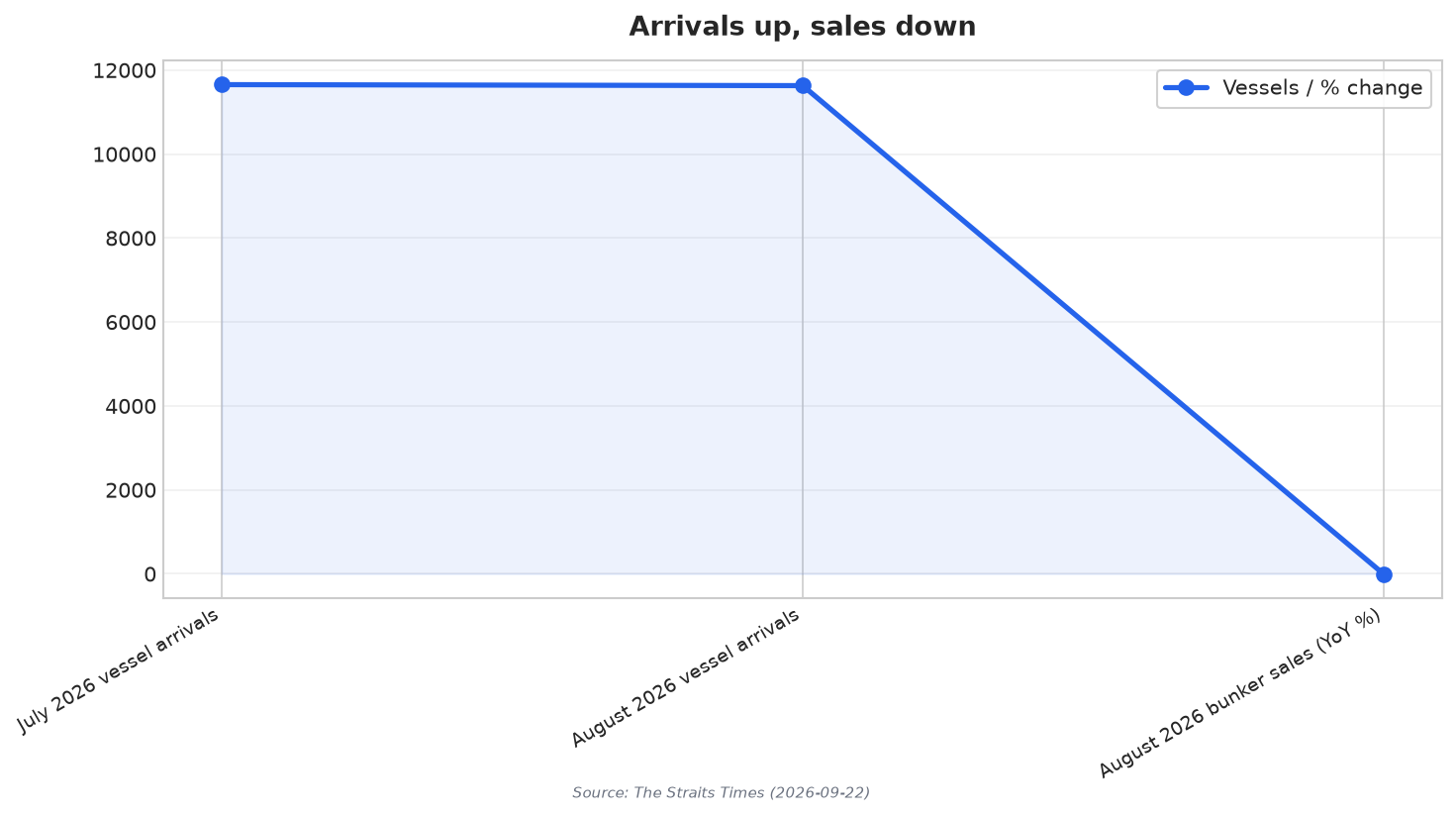
Higher prices and operating tactics explain part of the mismatch. In August 2026, bunker fuel sales in Singapore fell by 4% even as vessel arrivals rose by 4%, with reporting linking the dip partly to ships conserving fuel amid high oil prices and longer routes. Another report also pointed to slower container shipping speeds, often called slow steaming, as a factor that can reduce refuelling volumes. In April, 3,438 vessels that called in Singapore specified bunkering as the main purpose, but many other ships still used the port for cargo transfer, repairs, supplies, or crew needs, meaning bunkering demand can shift without the overall flow of ships collapsing.
Even as supply fears eased, bunker prices remained elevated, which keeps Singapore central but also makes buying decisions harder. In Singapore, very-low-sulphur fuel oil (VLSFO) was assessed at about $908 per metric ton in mid-September, with marine gasoil (MGO) at $1,448 per ton and high-sulphur fuel oil around $770 per ton. Another pricing snapshot put Singapore VLSFO at approximately $825 per tonne on September 1. Industry comments also said outright prices of VLSFO in Singapore were up more than 60% versus pre-war levels, underscoring why shipowners may delay purchases or reduce stem sizes even when they keep calling at Singapore.
Singapore’s advantage also reflects what is happening elsewhere. In Fujairah, a major refuelling hub in the United Arab Emirates that serves vessels transiting the Strait of Hormuz and the Indian Ocean, bunker activity was estimated to have recovered to about 40% of pre-war levels. That gap helps explain why Singapore bunkering has been described as steady since the war started, even without a simple one-for-one substitution from Gulf ports. Meanwhile, some traffic still transits Hormuz: industry comments cited approximately 10 to 15 daily transits both ways for commodity vessels via the Omani corridor. With routes disrupted but not fully closed, many operators keep Singapore as the dependable place to load fuel when access matters most—shaping the narrative around a Singapore bunker sales record in 2026 without implying every month is a new high.
What do people mean by the Singapore bunker sales record 2026 story?
Did Singapore get more vessel arrivals in 2026?
Why did bunker sales fall even when more ships arrived?
Are bunker fuel supplies still tight in Singapore?
How does Fujairah’s recovery affect Singapore bunkering decisions?