
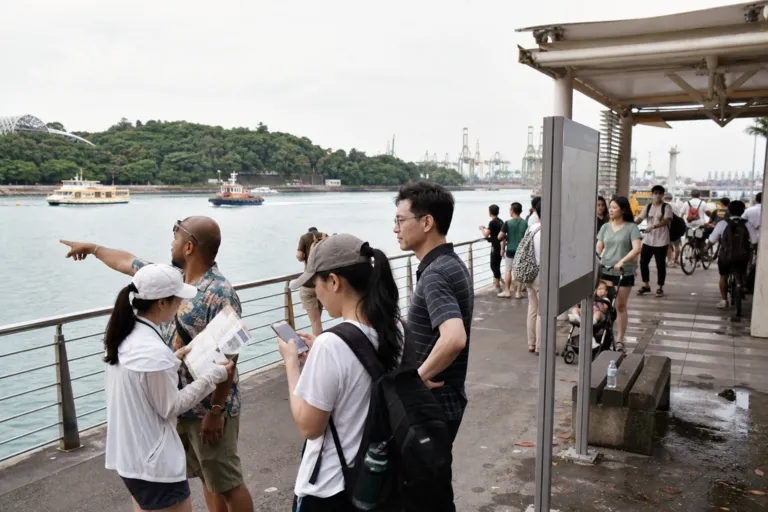
The Sentosa-Brani Master Plan for Singapore sits inside the newly unveiled Greater Sentosa Master Plan (GSMP), a 20-year transformation of Sentosa Island and neighbouring Pulau Brani. The Sentosa Development Corporation (SDC) says the strategy will integrate the 120ha Pulau Brani into the precinct with new attractions, transport infrastructure and expanded green spaces. The ambition is also about scale and demand. The GSMP aims to double the size of Singapore’s island destination and is expected to attract twice as many visitors as the island receives today. At the same time, SDC frames the experience as an “Island Playground and Sanctuary in a Global City”, designed to help guests stay longer and return more frequently.
That visitor story starts with what Sentosa looks like right now. International visitors account for 80 per cent of Sentosa’s visitors, while domestic visitors make up 20 per cent. The Straits Times reported that more than 16 million visitors visited the island between April 2024 and March 2025. Against that baseline, the GSMP is positioned as both a refresh and an expansion, with SDC aligning strategies with the Singapore Tourism Board’s priority source markets while developing new tourism products and experiences. The plan also anticipates shifting demand around Singapore’s southern coast, including the Greater Southern Waterfront project, which is expected to add around 100,000 new homes, and the opening of Changi Airport Terminal 5 by 2035.
From Gateway to Green Network: What Changes First
The first phase centres on arrival and movement. A new gateway known as the Island Heart will become the main arrival point for visitors, and it will be the only reclaimed land within the project. The Straits Times described it as an Island Heart Transport Hub that links the mainland to Greater Sentosa and connects Sentosa with Pulau Brani. Mobility upgrades are also on the table. A new people-mover system will replace the existing 2.1km Sentosa Express Monorail, and the new system is planned to carry more people and be built at-grade. SDC is also studying options such as water taxis and additional waterfront links, complementing existing modes like the Singapore Cable Car.
Alongside access, the blueprint tries to make the island precinct more walkable, nature-led and “free-to-enjoy” in parts. Sources describe plans to increase green walking trails, coastal trails and the waterfront promenade, while also improving beaches and adding ecological protection to shorelines. On the design side, consultancy work for SDC describes five character zones: vibrant cluster, island heart, waterfront, ridgeline and beachfront. This zone approach matters because Sentosa’s attraction areas, natural and heritage areas, waterfront promenades and beachfront areas do not need identical solutions. The sustainability vision referenced in project materials includes biodiversity, visitor experience and accessibility to transport, supported by calculations and environmental simulations.
Phasing is where the promise becomes concrete. After the Sensoryscape walkway opened in 2024 as the first completed project under the master plan, the next major milestone is expected by 2030. That phase includes the Resorts World Sentosa 2.0 expansion, featuring the Waterfront Lifestyle Development and Super Nintendo World at Universal Studios Singapore, as well as the opening of Imbiah Canopy on Mount Imbiah. Visitors can also expect the Imbiah Lookout Walk, described as a sheltered elevated walkway linking Sensoryscape with Imbiah Lookout, surrounding trails and a new treetop skywalk leading to Siloso Beach. The 2030 phase also includes a redevelopment of Siloso Beach and a floating boardwalk designed for an islet-hopping experience, while longer-term plans look to Brani West for new entertainment attractions and a continuous green network that links directly with the Southern Ridges.
What is the Sentosa-Brani master plan in Singapore trying to achieve?
How many visitors does Sentosa get today, and who are they?
What is the Island Heart and why does it matter?
What transport changes are proposed under the Greater Sentosa Master Plan?
Which attractions are expected around 2030?