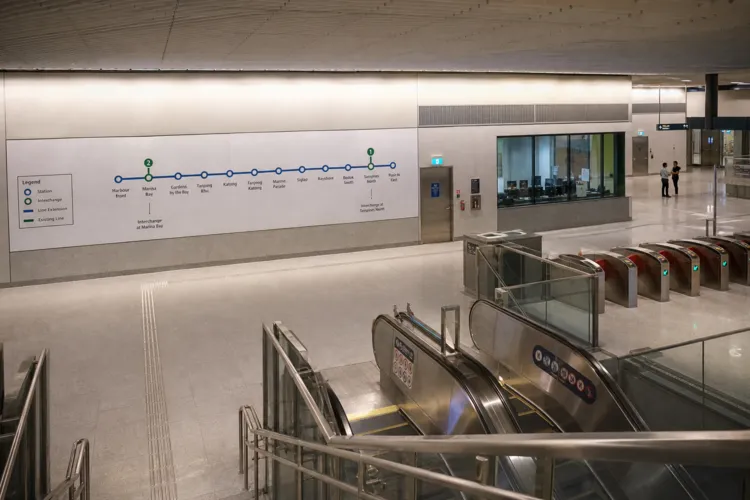

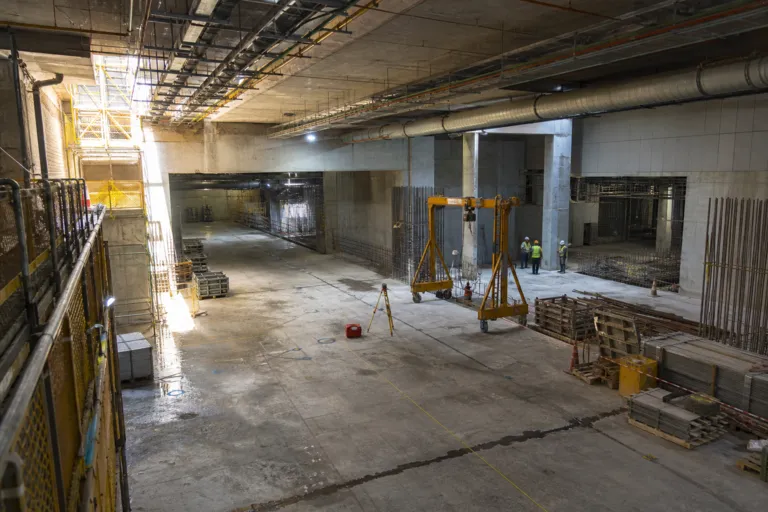
CRL3 is the third and final phase of the Cross Island Line in Singapore’s west. Announced on July 31, 2026, it extends the line by about 10km from the future Jurong Lake District station (CR19) to Gul Circle (CR23). Along the way, four underground stations are planned, numbered CR20 to CR23. Construction is expected to begin in 2027, and the stations are targeted to open by the late 2030s. This new stretch is framed as a way to connect key residential and industrial areas with “more direct and convenient” MRT options, including interchange links that reduce the need to route trips via Jurong East for certain journeys.
The interchange story sits at CR21. Sources describe CR21 as a gateway to Jurong Island and an interchange with the upcoming Jurong Region Line (JRL), connecting specifically to Jurong Pier station (JS12). This is the centre of the Singapore Jurong Lake District CRL3 JRL interchange discussion, because it ties the future Jurong Lake District node on the Cross Island Line’s western end to a new line intended to serve Singapore’s western region. For commuters, the practical meaning is simpler transfers between the Cross Island Line, the JRL, and—via CR23 at Gul Circle—the East-West Line, creating more options that remain within the rail network.
CRL3’s Westward Links: From Taman Jurong to Gul Circle
CRL3’s other stops show how the west’s travel patterns could change. CR20 is expected to serve residents in Taman Jurong and is described as being located along Jalan Terusan, beside the Ayer Rajah Expressway and near Jurong Lake Gardens, serving homes around Taman Jurong Skyline and Yung Ho Spring I, as well as St Andrew’s Nursing Home. CR22 is described as being within Jurong Industrial Estate, while CR23 links to the existing Gul Circle station on the East-West Line. Together, these connections are positioned to provide better access to industrial areas around Jalan Buroh, Benoi and Gul, while also improving how residents reach the wider island without defaulting to the often-busy East-West Line for every west-to-east journey.
Several quantified outcomes have been cited for the wider Cross Island Line once it is fully operational. The line has been described as having 11 interchange stations, supporting network resilience by offering alternative routes during disruptions. It is also expected to serve up to one million daily passengers when fully operational. Travel time impacts have also been highlighted: commuters travelling to and from western Singapore could save up to 50 minutes once the line is completed. Specific examples were shared, including a future commute from Sin Ming Gardens to Jurong Pier Road taking about 40 minutes, compared with 90 minutes via bus and train now, and a trip from Taman Jurong Skyline to Ang Mo Kio Industrial Park 2 taking 45 minutes with the Cross Island Line, down from 90 minutes by bus now.
CR21’s interchange with the JRL also matters because the JRL is being built as a western connector in its own right. The JRL is under construction and is intended to serve the western region of Singapore, particularly the new town of Tengah and its surrounding districts. It is scheduled to open in stages, with the first stage opening in 2028. The line will initially comprise 24 stations and, upon completion, will become Singapore’s first fully elevated MRT line and the fifth to operate entirely with automated, driverless trains. In the longer term, a future extension linking Pandan Reservoir station on the JRL to West Coast station on the Cross Island Line and Kent Ridge on the Circle Line is planned for completion in the late 2030s to early 2040s, reinforcing how these lines are being designed to meet.
When will CRL3 construction start and when could stations open?
Which station is the CRL3 interchange with the Jurong Region Line?
How does the Jurong Lake District CRL3–JRL interchange change west-side transfers?
What travel time savings have been cited for the Cross Island Line when fully operational?
What are key facts about the Jurong Region Line’s rollout?