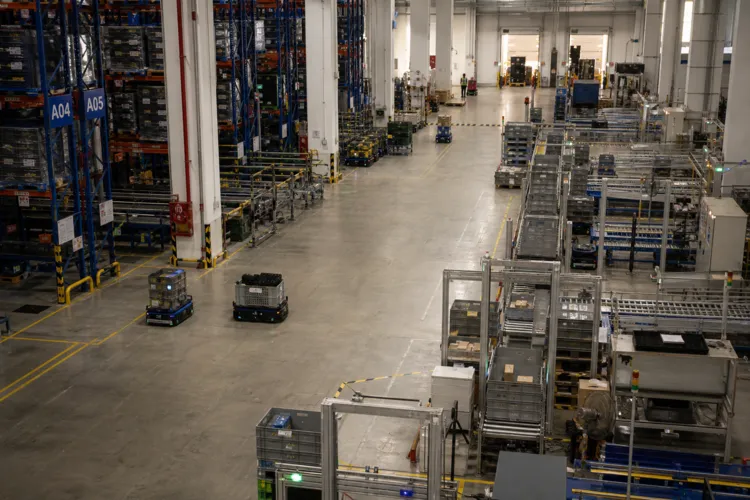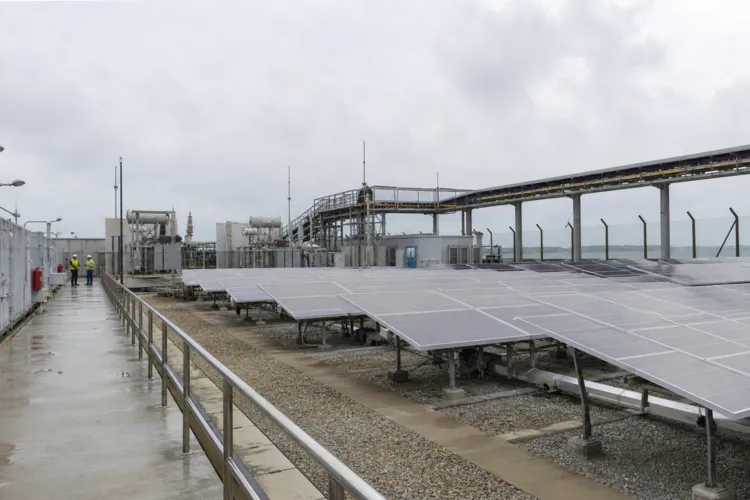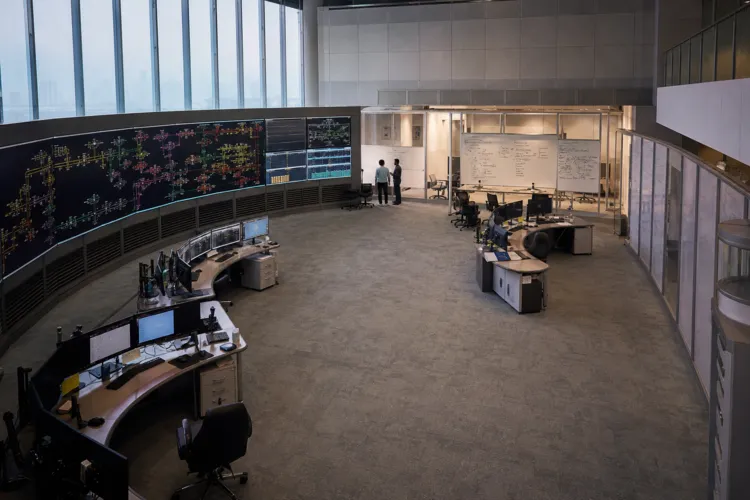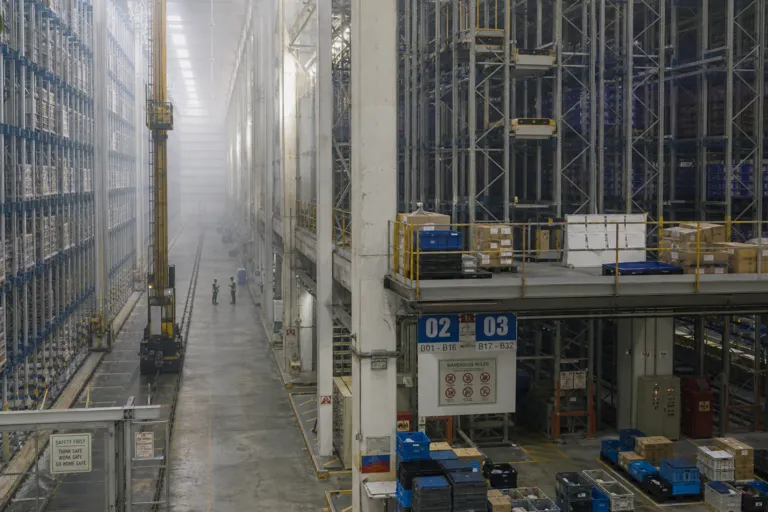
Across Singapore logistics, automation is shifting from a productivity upgrade to a continuity strategy. Singapore already ranks among the most automated countries in the world, with sources citing robot density of 818 robots per 10,000 employees (2024, International Federation of Robotics) and 670 robots per 10,000 human employees (2022, IFR). That context matters because the labor market is tight. Singapore’s Ministry of Manpower reported 63,400 job vacancies as of September 2024 and a ratio of 1.39 job vacancies for every unemployed person. In that environment, warehouses that rely on manual picking, case movement, and pallet storage face an immediate constraint: finding people, keeping throughput steady, and controlling operating costs.
E-commerce demand adds urgency and volatility to daily warehouse work. One Singapore-focused estimate put the country’s e-commerce market at a gross volume of $8.2 billion in 2022 and predicted growth to $11 billion by 2025 (ITA, cited in a Singapore warehouse robotics market report). Regionally, Southeast Asia’s digital economy hit US$263 billion in gross merchandise value in 2024, up 15% year on year, with e-commerce the largest driver (Google, Temasek & Bain, e-Conomy SEA 2024). Globally, worldwide retail e-commerce sales reached US$6.334 trillion in 2024, representing 20.1% of all retail (eMarketer 2024). These figures do not describe a single warehouse, but they explain why operators are looking at automation systems that can scale output without relying on headcount growth.
Why Shuttles, Cranes, and ASRS Are Becoming Core Warehouse Infrastructure
ASRS and automated material handling systems are increasingly positioned as infrastructure, not experiments. A Singapore ASRS market source states that adoption is accelerated by integration with the nation’s advanced port infrastructure and digital supply chain initiatives, supporting seamless cargo handling and real-time inventory management. The same source cites a 6.4% CAGR and links demand to port operators, electronics manufacturers, and third-party logistics providers focused on warehouse efficiency and lowering operational costs. On the broader hardware side, Mordor Intelligence places the Asia Pacific automated material handling market at USD 33.54 billion in 2026, growing at a CAGR of 11.62% to reach USD 58.19 billion by 2031. In the same report, it is stated that 40% of Singapore’s warehouses had deployed autonomous mobile robots by 2024, underscoring how quickly automation is moving from pilot to standard practice.
Case-handling robots, AMRs, and goods-to-person systems strengthen the business case by lifting labor productivity in measurable ways. DHL reported that autonomous mobile robots roughly doubled picking productivity in its order-fulfilment operations (Trax Technologies on DHL, 2025). In Singapore, the warehouse robotics market outlooks point to sustained growth. One report valued Singapore’s warehouse robotics market at USD 35.3 million in 2024 and predicted it would reach USD 105.4 million by 2030 (19.0% CAGR from 2025 to 2030). Another estimated Singapore generated USD 218.9 million in warehouse robotics revenue in 2025 and could reach USD 830.6 million by 2033, with an 18.34% CAGR from 2026 to 2033. Together, these signals help explain why “Singapore warehouse automation ASRS demand 2026” is increasingly framed around integrated solutions: shuttles and cranes for dense storage and fast retrieval, paired with mobile and case-handling robots that reduce walking time and stabilize output.
Cost and capability still shape how fast automation rolls out, especially for smaller operators. A Southeast Asia warehouse automation report values the regional market at about USD 0.87 billion in 2025 and projects it will reach USD 1.95 billion by 2032. The same source notes that basic systems can start around USD 50,000, while larger integrated systems for storage, robotics, and conveyors can reach into the millions of dollars. Singapore’s policy support helps bridge that gap: Enterprise Singapore’s Enterprise Development Grant can co-fund up to 70% of qualifying project costs for automation and digital transformation, encouraging earlier adoption of ASRS, robotics, and WMS platforms. Even so, multiple sources also highlight constraints such as limited financing options and the shortage of skilled professionals needed to maintain, program, and troubleshoot warehouse robotics, making workforce upskilling part of the automation race.
What is driving Singapore warehouses to automate now?
How automated is Singapore compared with other countries?
What do shuttles, cranes, and ASRS change inside a warehouse?
What evidence suggests robots can improve warehouse productivity?
What does the outlook imply for Singapore warehouse automation and ASRS demand toward 2026?