US Section 301 investigations have put Singapore’s trade position under scrutiny, with potential implications for export planning and investor confidence. The Office of the United States Trade Representative (USTR) initiated a probe on March 11 covering 16 economies, including Singapore, tied to “structural excess capacity and production” in certain manufacturing sectors. In parallel, the USTR launched a second probe into 60 economies, including Singapore, focused on alleged gaps in prohibitions on imports of goods produced with forced labour. Singapore said it will engage US trade authorities, clarify trade data, and defend its record as a rules-based and open trading economy.
A central issue has been the accuracy of the bilateral trade picture used in the US process. Singapore’s Ministry of Trade and Industry (MTI) said the US “has enjoyed a consistent trade surplus with Singapore for over 20 years.” MTI cited US Bureau of Economic Analysis figures showing that the US had a US$1.9 billion goods trade surplus and a US$25.1 billion services trade surplus with Singapore in 2024. MTI also said these surpluses grew in 2025 to US$3.6 billion for goods and US$29.6 billion for services. The US later removed a statement from its Federal Register notice that wrongly said Singapore ran a US$27 billion bilateral trade surplus with the US.
Where Tariffs Could Land—and Why Exclusions Matter
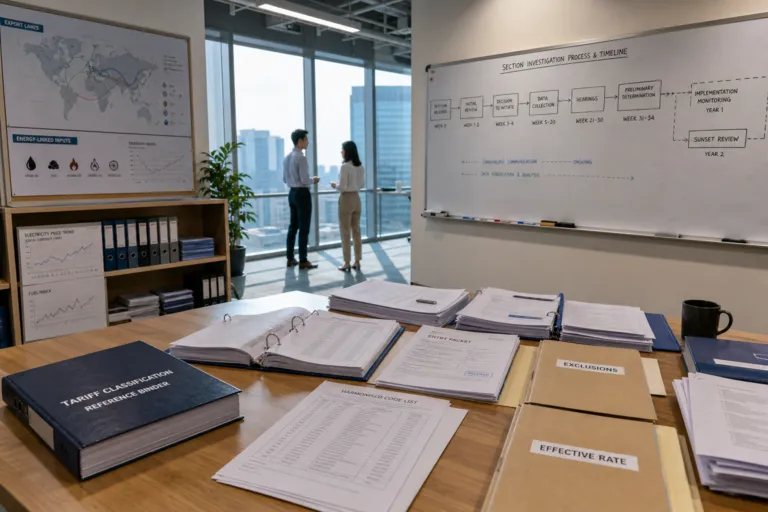
For exporters tracking the Singapore Section 301 probe energy 2026 storyline, the immediate lesson is to separate “headline” tariff announcements from what applies in practice. On Jul 24, the USTR announced an additional 12.5% tariff on Singapore’s exports to the US after concluding the forced-labour-related Section 301 probe into 60 economies. However, there were specific exclusions for energy products, pharmaceuticals, certain electronics, aerospace products, semiconductors, and metals used in currency and bullion, and products subject to Section 232 tariffs were exempt. Maybank economist Brian Lee said the headline increase was “modest” at 2.5 percentage points because the temporary Section 122 tariff expired the same day, and noted that only about a third of Singapore’s domestic exports to the US would be subject to the new tariff.
Trade balances by sector also complicate the “excess capacity” narrative. Using US Census Bureau data cited in Singapore’s submission, the US ran a trade surplus with Singapore in two of three sectors highlighted in the USTR initiation notice in 2024: semiconductors and electrical equipment (US$1.8 billion) and petrochemicals (US$463 million). Those surpluses grew in 2025 to US$3.8 billion and US$547 million, respectively. Pharmaceuticals moved the other way: the US ran a trade deficit against Singapore of US$17.7 billion in 2024, which shrank to US$12.9 billion in 2025. For firms, that mix underscores why product classification, exclusions, and sector-specific exposure matter as much as broad political signals.
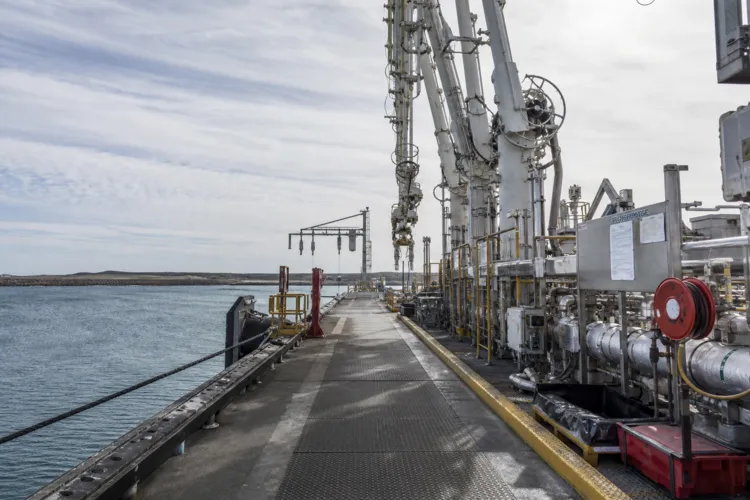
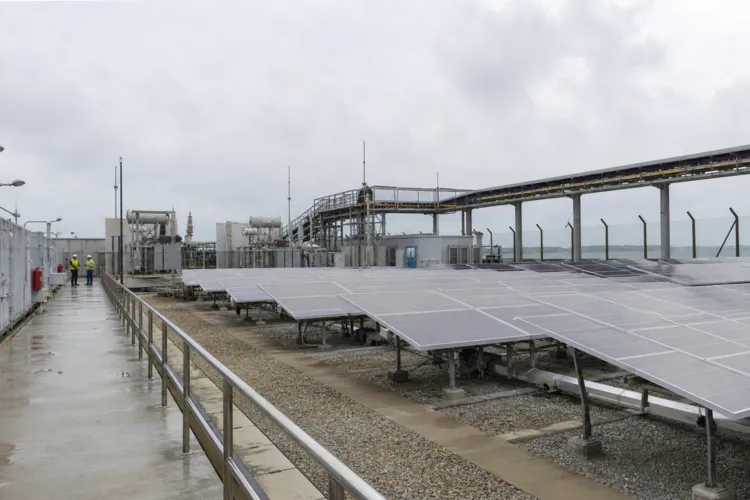
Energy is part of the conversation even when the trade action is not directly aimed at fuel. Singapore officials have warned electricity prices could rise even if supply remains secure, because electricity prices remain tied to global fuel costs as Singapore generates most of its power from natural gas. Authorities have said Singapore maintains diversified supply arrangements and infrastructure, and holds several months’ worth of energy stockpiles to cushion supply shocks if international supply chains are disrupted. MTI also said it would attend public hearings in Washington, DC from May 5 to 8 on the Section 301 investigations. The combination of trade-policy uncertainty and globally driven fuel-price pressure is why exporters are being advised to review classifications, engage customers early, and assess pricing, contracts, and supply chains.
What Section 301 investigations include Singapore, and how many economies are involved?
What did US data cited by Singapore say about the bilateral trade balance in 2024 and 2025?
Which sectors showed US trade surpluses with Singapore, and what were the figures?
How did the Jul 24 tariff announcement affect Singapore exports, and what was excluded?
What does the Singapore Section 301 probe energy 2026 topic mean for exporters watching power costs?