
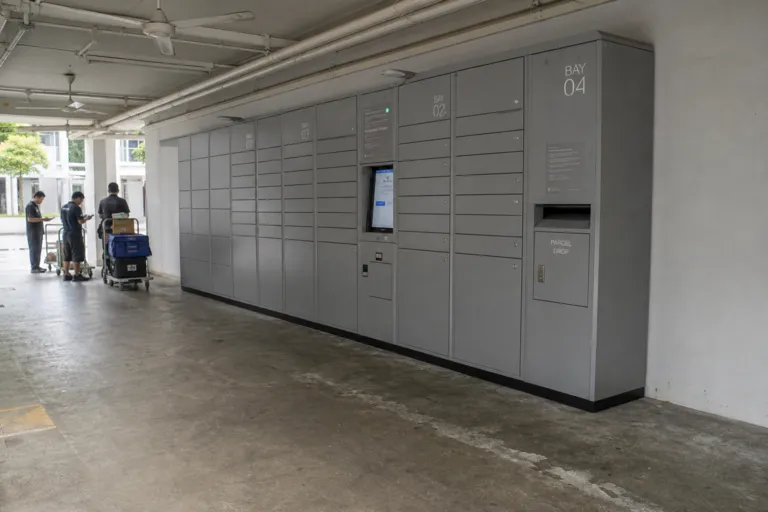
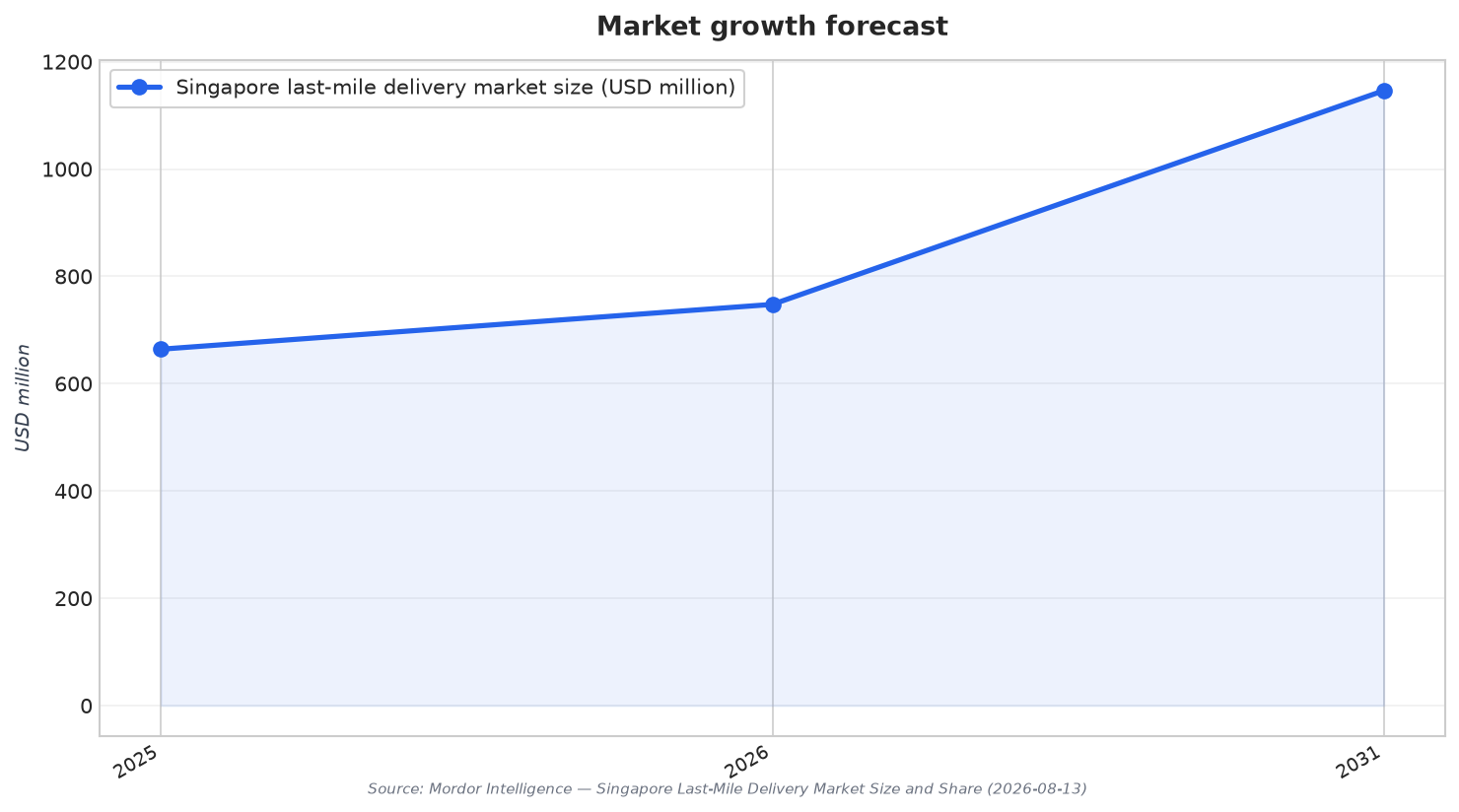
Singapore’s last-mile delivery market is projected by Mordor Intelligence to grow from USD 664.24 million in 2025 to USD 747.72 million in 2026, and to reach USD 1,146.13 million by 2031 at an 8.92% CAGR over 2026–2031. That growth sits alongside changing consumer expectations. In the same Mordor report, 52% of shoppers are said to expect sub-24-hour fulfillment, raising the cost of missed drop-offs and repeat attempts. A consolidated parcel locker approach fits dense estates because it shifts delivery from many doorsteps to fewer controlled handover points, improving drop success while keeping convenience close to where people live.
The pressure behind consolidation is visible in parcel throughput. In Mordor’s Singapore freight and logistics coverage, SingPost handled more than 200 million items in 2024, with parcel volumes rising in double digits. That same source notes that locker networks within residential precincts cut failed deliveries, which matters when carriers also face margin pressure from platform free-shipping thresholds. At the market-structure level, standard delivery held 52.34% share in 2025, while express delivery is projected to post an 11.1% CAGR through 2031. As faster services expand, locker-based delivery becomes a lever to protect reliability in peak periods without multiplying doorstep attempts.
Why Lockers Are Becoming the Default Handover Point
Academic research frames parcel lockers as an operational alternative with potential environmental benefits because they can reduce failed deliveries, repeated trips, and community-level vehicle congestion. The same research highlights that last-mile efficiency in Singapore has been studied using an open-access locker network, and it finds that an optimal nested network design aligned with the largest logistics service providers’ operations is critical. In practice, this points to consolidation: fewer, better-placed lockers with planned capacity and shared access can outperform fragmented deployments. It also connects to capacity planning questions, such as reserving locker space for different shipping options and using demand prediction to maximize throughput.
Consolidation is also tied to automation and how operators restructure networks. Mordor’s freight and logistics report notes that capacity pressure triggered investment in automated sortation hubs and last-mile micro-fulfillment sites by DHL and SF Express. It adds that DHL and SF Express together deployed electric cargo bikes to shave urban delivery costs by 15%. When parcels can be injected into a neighborhood locker bank instead of routed across many apartment doors, micro-fulfillment and automation gains translate more directly into predictable last-mile runs. This is the operational logic behind a Singapore last-mile parcel locker network 2026 narrative: using proximity pickup to stabilize service quality under higher volumes.
Demand composition supports the shift. Mordor reports that e-commerce retail accounted for 28.65% of Singapore’s last-mile delivery market in 2025, while healthcare and medical supplies are rising at a 13.21% CAGR to 2031. It also states that close to 55% of online purchases in Singapore arrive from overseas merchants, and that social-commerce channels now funnel 59% of all cross-border purchases—patterns that create many small parcels and volatile peaks. Lockers help absorb this micro-shipment flow by creating standardized delivery endpoints. Globally, locker markets are expanding too: DataIntelo estimates the global last-mile delivery locker market at $5.8 billion in 2025, projected to $12.4 billion by 2034 at 8.7% CAGR, providing broader context for why Singapore’s consolidation direction is accelerating.
What is driving Singapore to consolidate last-mile deliveries around parcel lockers?
How big is Singapore’s last-mile delivery market in 2026 according to Mordor Intelligence?
What do sources say about parcel volumes that make lockers more relevant?
How does automation connect to locker-based last-mile strategies in Singapore?
What does the Singapore last-mile parcel locker network story in 2026 emphasize?