
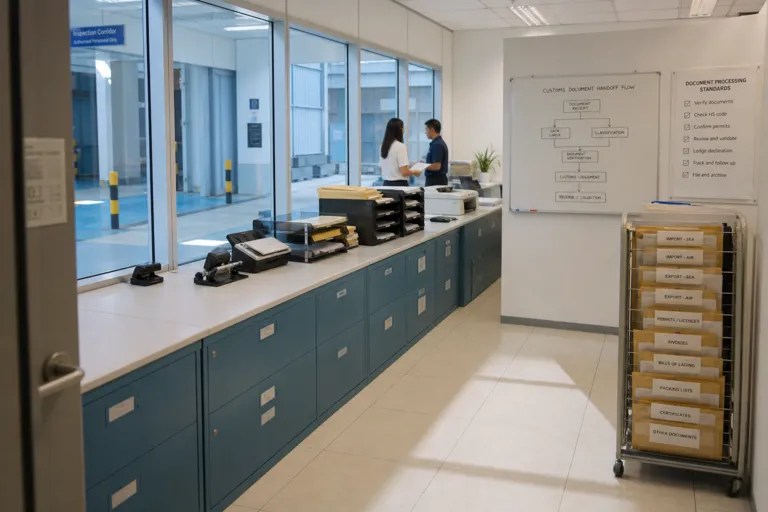
Cross-border transactions are still burdened by paper. The International Chamber of Commerce (ICC) notes that a cross-border transaction involves multiple actors and requires the exchange of 36 documents and 240 copies on average, yet fewer than one percent of trade documents are fully digitized. The same ICC resource also frames the scale of global trade as US$ 28 trillion in 2021, which helps explain why reducing friction matters. Paper-heavy workflows create delays and increase the chance of errors, especially when documents move by courier and need repeated manual checks. In practice, these pain points show up at the most operational moment: cargo release and the transfer of ownership documents that must be trusted by every party involved.
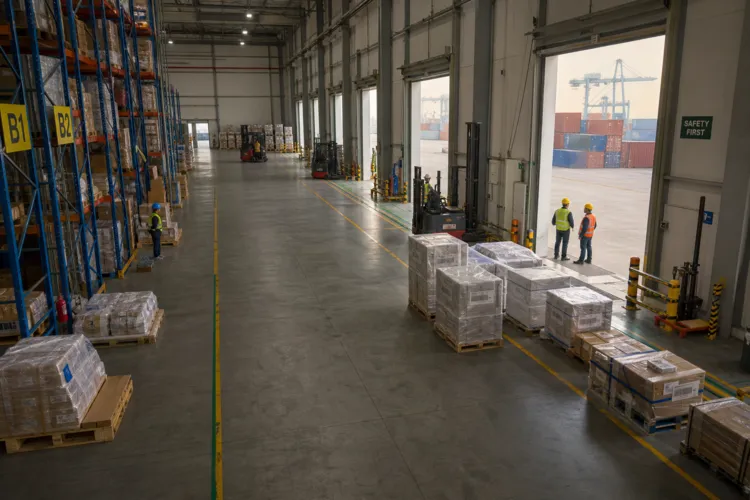
A Singapore-linked example of paperless execution appears in a 2026 Business Times report on TradeTrust and interoperable digital documents. When one of China’s largest agri-food processing companies, COFCO Industrial Foods, first used a digital trade document for a shipment to Singapore in 2023, it tested whether an electronic bill of lading (eBL) could be trusted, legally recognised, and accepted across the supply chain. The container shipment of canned food from Xiamen to Singapore-based distributor Yit Hong used documents that were previously sent by courier, but were instead exchanged digitally and securely. The result was practical: the process reduced document transfer time from days to just a few hours, supporting faster cargo release. Every party in the supply chain could independently verify the provenance and authenticity of the eBL.
Interoperability First: From Documents to a Network
The TradeTrust approach is described as an open-source framework developed by Singapore’s Infocomm Media Development Authority (IMDA). In the Business Times report, IMDA’s Liau Eng Soon says TradeTrust was created to address interoperability and legal enforceability, described as two critical pillars for cross-border digital trade to scale. IMDA observed that as trade digitalised, many solutions were built independently without interoperability, creating closed ecosystems where cross-platform exchange was complex or impossible. This is why the idea of a “networked” model matters more than a single platform. In this context, the keyword topic—Singapore Networked Trade Platform digital trade 2026—fits a reality where enabling secure exchange across different systems is a core design requirement, not an optional feature.
The same report describes how, following the trial, COFCO began adopting paperless trade document workflows using AEOTradeChain, a digital trade platform developed by Beijing-headquartered AEOTrade. AEOTradeChain is positioned as a “one-stop shop” for digital trade transactions supporting end-to-end processes between businesses, financial institutions, and government agencies. The workflow scope cited includes supply–demand matching, logistics fulfilment, customs clearance processing, and payment settlement. AEOTrade’s founder, Yang Zetao, points to interoperability as a key concern for international trade companies, and a core starting point for the platform’s architectural design. He also explains that TradeTrust is not a tech system on its own, but an open-source framework that can be plugged into existing platforms to help enterprises connect to a broader digital trade network.
Standards and finance are the other two enablers that turn pilots into routine practice. The ICC-WTO Standards Toolkit for Cross-Border Paperless Trade compiles the work of 16 standard-setting bodies and aims to help supply chain participants identify notable standards, gaps, and interoperability needs. It also links expected benefits to different stakeholders, including more efficient operations for corporations and MSMEs and speedier goods clearance for customs authorities. On the finance side, a Finastra viewpoint cites KPMG data stating that paperless trade can increase profitability by up to 15%, generating more than $200 billion in global savings. Together, these sources underscore why Singapore’s document-led, interoperability-first direction is not only about faster workflows, but also about scaling trust and connectivity across borders.
Why does cross-border trade stay paper-based for so long?
What changed in the 2023 COFCO shipment to Singapore when digital documents were used?
How does TradeTrust support a networked approach to digital trade?
How does AEOTradeChain fit into paperless trade workflows mentioned in the Singapore-linked example?
What does the Singapore Networked Trade Platform digital trade 2026 topic imply in practical terms?