
Weekend travel in Singapore is being reshaped by a practical reality. The MRT has to keep moving people while also replacing and upgrading critical assets. The rail network started operations in November 1987 with an initial 6 km stretch and five stations. It has since grown to about 246.6 km and, as of July 2026, has 146 operational stations across six lines. Average daily ridership was 3.49 million in 2025. With scale and age together, planned disruption is no longer only a late-night inconvenience. It is increasingly a weekend planning issue that affects shopping trips, family visits, and leisure routes.
Acting Transport Minister Jeffrey Siow said passengers can expect more scheduled closures that are stretched out over a longer period to create more time for major upgrades of MRT lines. He pointed to an upcoming 10-day stoppage of train services on stretches of the East-West Line from late November as an example. From Nov 29 to Dec 8, train services will not run between Bedok and Tampines stations, and there will also be no service between Tanah Merah and Expo stations during that period. The logic is simple. Shortening operational hours with early closures and late openings is no longer enough when upgrades need a continuous block of maintenance time.
Why Longer Closures Are Becoming the Renewal Playbook
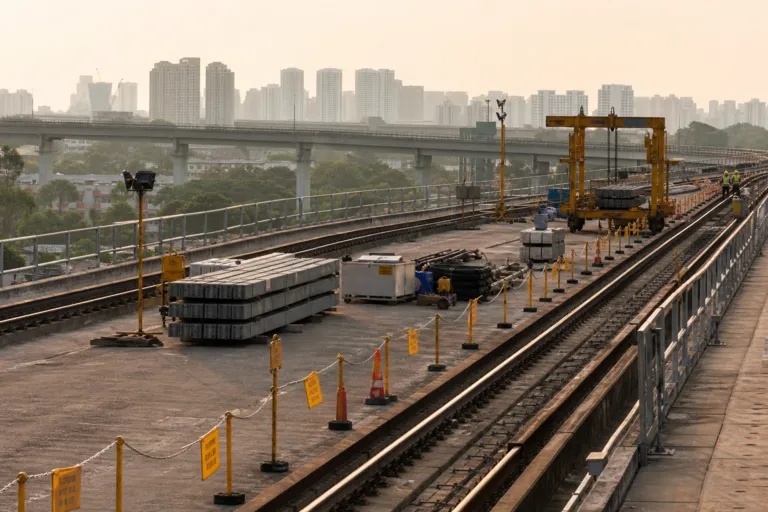
The constraint is the amount of usable engineering time available each night. Siow noted that maintenance is done in a 3.5-hour window starting from the time train services fully shut down at night and ending when the system starts up again. When the time needed to deploy and extract heavy equipment is included, there are only about two engineering hours every night to carry out works. That is scarcely enough time to ready the system for the next morning, much less complete major upgrades. That is why continuous shutdown blocks, often placed on weekends and extended periods, can be positioned as a safety and execution choice rather than an inconvenience alone.
Industry voices have also been clear about the direction of travel. An international panel of rail experts suggested that the Land Transport Authority should carry out longer planned shutdowns of segments of the rail network so critical maintenance and renewal works can be done safely and efficiently. A separate advisory panel supporting a task force to improve reliability said that as Singapore’s network grows and ages, maintenance and renewal activities will have to pick up in pace. The task force was set up after at least 15 delays and interruptions across the MRT and LRT networks between July and September, and it is reviewing asset renewal, passenger communication during disruptions, and technology to monitor core systems such as signalling and power supply.
For commuters, the travel impact is about certainty as much as speed. At a Straits Times roundtable, panellists said the non-monetary cost of delays or being unable to travel because of maintenance programmes is borne by commuters, and these impacts must be minimised. They also stressed that commuters value clear communication about planned disruptions, because it helps them reroute and plan around changing conditions. Over time, the scale of the system makes renewal unavoidable. Wikipedia notes cumulative capital expenditure on MRT rail infrastructure reached S$150 billion in 2021. Against that backdrop, Singapore MRT rail renewal works in 2026 are not just engineering projects. They are a new weekend travel pattern that rewards checking updates, mapping alternatives, and planning trips with closures in mind.
Why are longer planned MRT closures happening more often in Singapore?
How much maintenance time is available each night for MRT works?
What was the example of a longer closure on the East-West Line?
What prompted the task force focused on reliability and renewal?
What should weekend travellers expect from Singapore MRT rail renewal works in 2026?