
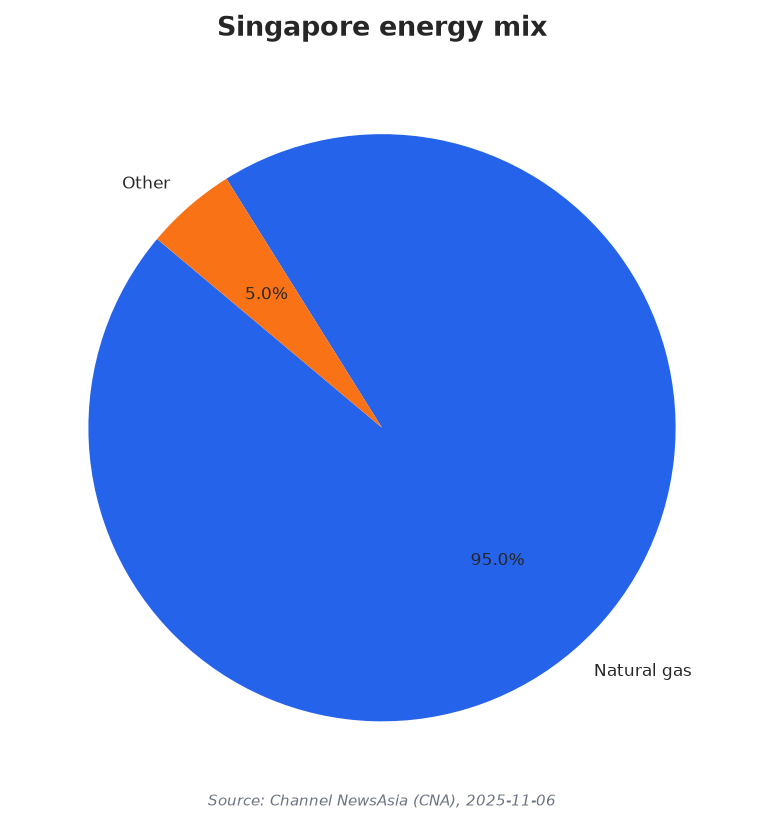
Singapore is trying to widen its future energy mix with both domestic sources and imports, as electricity use in Southeast Asia is expected to increase sharply in the coming years. Today, Singapore relies almost entirely on imported natural gas to meet its power needs, and natural gas makes up about 95pc of the country’s energy mix. Solar is seen as the most viable renewable option, but land constraints limit how much it can contribute. At the Singapore International Energy Week conference, the minister-in-charge of energy said solar can supply at most 10pc of Singapore’s total projected electricity demand by 2050, which is why other options, including geothermal, are being assessed.
Against this backdrop, Singapore geothermal energy exploration 2026 is better understood as a feasibility push rather than a guaranteed build-out. The Energy Market Authority (EMA) said it will issue a Request for Proposal for a comprehensive study to assess the feasibility of deploying geothermal energy systems in Singapore for power, heating, and cooling needs. The study will assess technical, environmental, and commercial feasibility, and it focuses on next-generation geothermal systems. In interviews cited by The Straits Times, geothermal was described as “very nascent,” with open questions about whether underground heat reservoirs can deliver stable electricity generation and whether it can be economically feasible.
What Singapore’s Subsurface Findings Suggest
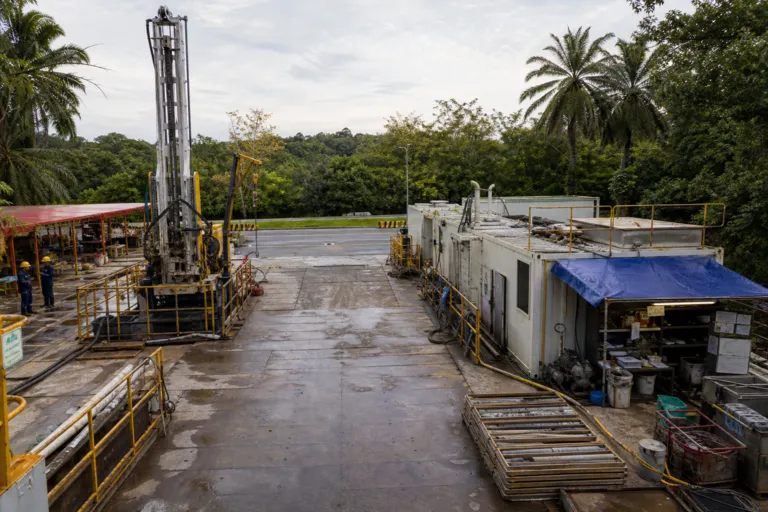
Local research has added fresh context to the feasibility work. CNA reported a record 122°C subsurface temperature found in Sembawang, based on granite rock core samples obtained from 1,600m below ground at the Sembawang site. Researchers also observed that the northern region tended to be hotter, and their analysis indicated heat flow in the northern part of Singapore is at least twice the global continental average, even though Singapore is not situated in a volcanic region. The sites in Admiralty and Sembawang were said to meet requirements, and both sit on Simpang granite, described as having a high concentration of naturally occurring heat-generating elements.
Geothermal is being evaluated while Singapore also scales other decarbonisation and reliability measures. Government estimates put total installed power capacity at more than 1.7 GWp currently, and likely to reach at least 2 GWp before 2030. Singapore also aims to import 6GW of low-carbon electricity by 2035, adding supply diversity beyond domestic constraints. In parallel, the government said it will set up a regulatory sandbox of up to 300MW to speed up development of the biomethane supply chain, and the EMA said it will award up to S$44mn ($34mn) to Keppel and Sembcorp to support deployment of advanced combined cycle gas turbines expected to be deployed by the end of 2026, cutting carbon emissions by at least 200,000 t/yr compared with current CCGTs.
Globally, the geothermal sector is also expanding, which matters because technology development and supply chains can shape what becomes commercially realistic in Singapore. One market report estimates the global geothermal energy market size at USD 9.03 billion in 2025, projecting growth to USD 9.78 billion in 2026 and USD 18.51 billion by 2034, with North America holding 39.5% market share in 2025. Another report puts the geothermal energy market size at $7.45 billion in 2023 and projects $9.22 billion by 2030. These global figures do not describe Singapore’s local potential, but they help explain why Singapore is studying geothermal alongside solar, imports, and other low-carbon options as it has pledged to achieve net zero emissions by 2050.
Why is Singapore studying geothermal energy now?
What did researchers find in northern Singapore that supports geothermal interest?
How does this relate to Singapore geothermal energy exploration in 2026?
What other clean-energy actions is Singapore taking alongside geothermal studies?