
Singapore is sharpening its national AI direction around four National AI Missions that target Advanced Manufacturing, Financial Services, Connectivity and Logistics, and Healthcare. An update to Singapore’s National AI Strategy priorities was announced on 20 May 2026 by Minister for Digital Development and Information Josephine Teo, building on National AI Strategy 2.0, which was launched in December 2023. The refreshed priorities are grouped into three focus areas: deepening sectoral and public sector transformation, mainstreaming AI adoption and workforce readiness, and building an AI hub. In this context, the Singapore National AI missions for advanced manufacturing, finance, and healthcare are positioned as the mechanism to move beyond isolated AI pilots and into national-scale execution.
Governance is a major part of how Singapore plans to make these missions work. The National AI Council (NAIC), chaired by Prime Minister Lawrence Wong, was established in February 2026 to provide strategic direction and drive Singapore’s AI agenda. In Budget 2026 remarks referenced in reporting, PM Wong also said he will front a new inter-ministerial committee to drive the execution of AI missions in advanced manufacturing, finance, healthcare, and connectivity and logistics. The intent, as described in coverage, is to reduce fragmentation by aligning research and development, regulation, and investment promotion so agencies “pull in the same direction,” while also embedding AI more deeply across Government for public sector transformation.
How the Missions Shift AI From Pilots to Scaled Workflows
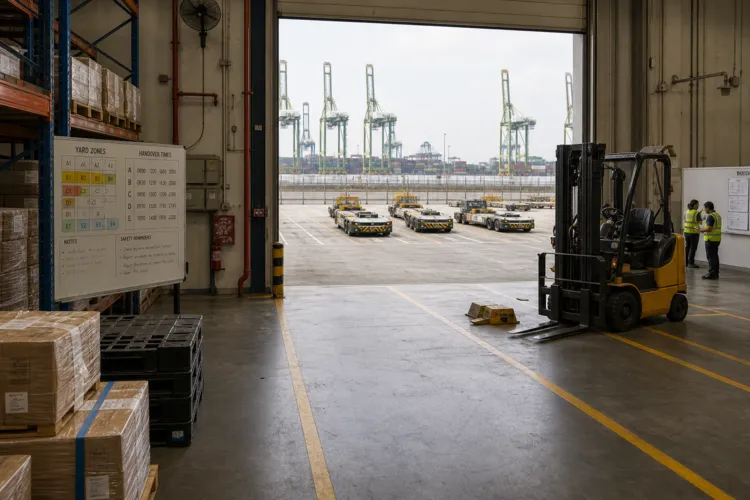
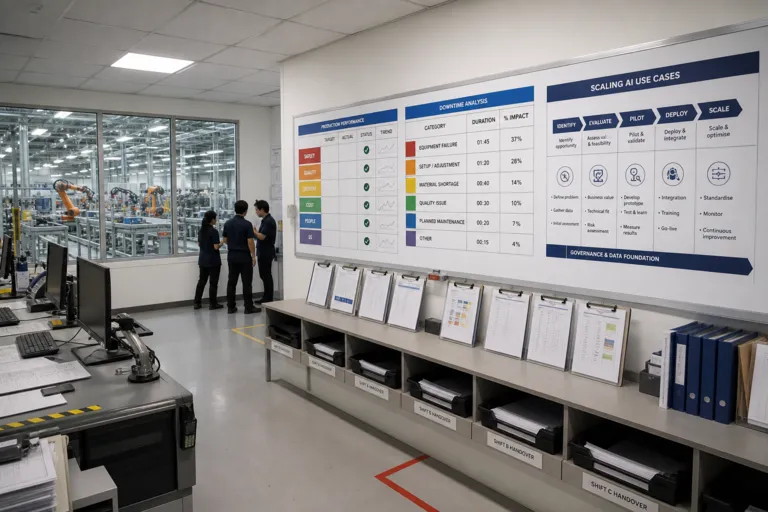
Advanced manufacturing illustrates the “pilot-to-scale” challenge Singapore is trying to solve. Reporting notes that AI is often used for predictive maintenance, where systems analyse real-time sensor data such as vibration, temperature, and equipment performance to forecast failures before breakdowns disrupt production. But experts cited say these tools can be deployed for individual machines or a production line rather than across entire supply chains, limiting productivity gains. Examples of activity include GlobalFoundries deploying the technology in its 300mm semiconductor fabrication plant in Woodlands. Separately, A*Star and the Ministry of Trade and Industry have operated a Sectoral AI Centre of Excellence for Manufacturing since September 2024, supporting use cases such as predictive maintenance, product design, and industrial automation; 13 companies, including Coca-Cola and Philips, were working with the centre at launch.
Across the other missions—financial services, connectivity and logistics, and healthcare—the emphasis is also on scaling AI into real workflows, not just experimenting. Commentary on the strategy says the four targeted sectors together account for over 40% of Singapore’s GDP, which helps explain the focus on missions rather than scattered initiatives. The updated strategy’s priorities also point to key enablers needed for sector-wide deployment: stronger applied AI research and engineering capabilities, “AI bilingual” talent, and governed access to relevant datasets. External reporting also notes that, since National AI Strategy 2.0 launched, more than 70 companies across sectors from advanced manufacturing to financial services have established AI Centres of Excellence in Singapore to support AI development and deployment aligned to business goals.
Singapore’s refreshed approach also highlights the barriers that have to be addressed when AI is embedded across industries at national scale. Coverage points to hurdles such as clear regulatory frameworks, data privacy, validation standards, transparency, and accountability. The NAIS update frames solutions in terms of stronger societal assurance and a “trusted environment,” alongside efforts to mainstream adoption and improve workforce readiness. One reported initiative is a plan to support 100,000 workers over three years to become “AI bilingual,” starting with accountancy and legal. Taken together, these moves show how Singapore is pairing the four missions with governance, talent, and trust-building measures designed to make AI adoption more coordinated, measurable, and durable.
What are Singapore’s four National AI Missions?
Who oversees the National AI Missions in Singapore?
How does advanced manufacturing show the “pilot-to-scale” challenge?
What figures show why these sectors matter to Singapore?
How do the Singapore National AI missions in advanced manufacturing, finance, and healthcare tie to workforce plans?