
Changi Airport Group (CAG) has unveiled an underground automated link that is set to connect the future Terminal 5 (T5) and Terminal 2 (T2) in four minutes. CAG described the system as operating similarly to the existing Skytrain that serves Terminals 1, 2, and 3. The goal is clear: smoother terminal-to-terminal movement inside a larger airport footprint. CAG has also said that transit passengers at T5 can connect to another flight in less than an hour, and the new link is positioned as a key enabler of that transfer experience.
Operationally, the new underground people-mover will run every four to eight minutes. Each train will have two carriages and carry about 96 passengers with luggage, which is described as about 48 passengers per carriage. CAG said two trains from a future fleet of five will operate simultaneously during service hours, though operating hours had not been decided at the time of the media visit. The link also helps passengers reach other parts of the airport network: once at T2, travelers can use the Skytrain or shuttle buses, including shuttle buses that connect T2 to Terminal 4, which is not served by the Skytrain.
Tunnels, Depth, and a Separate Route for Bags
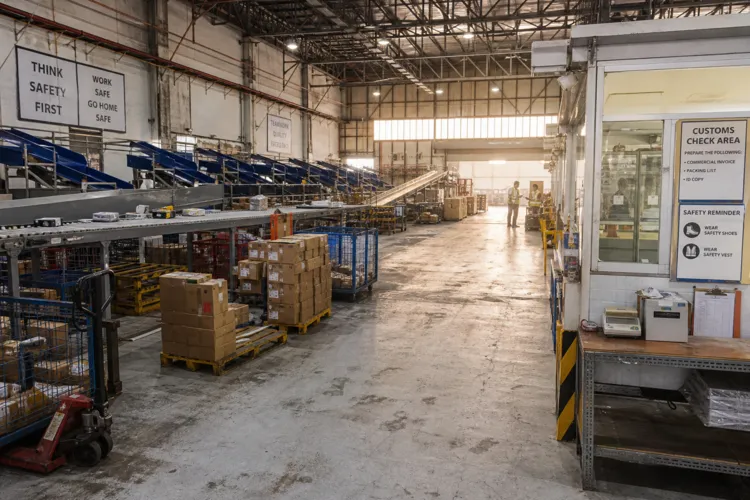
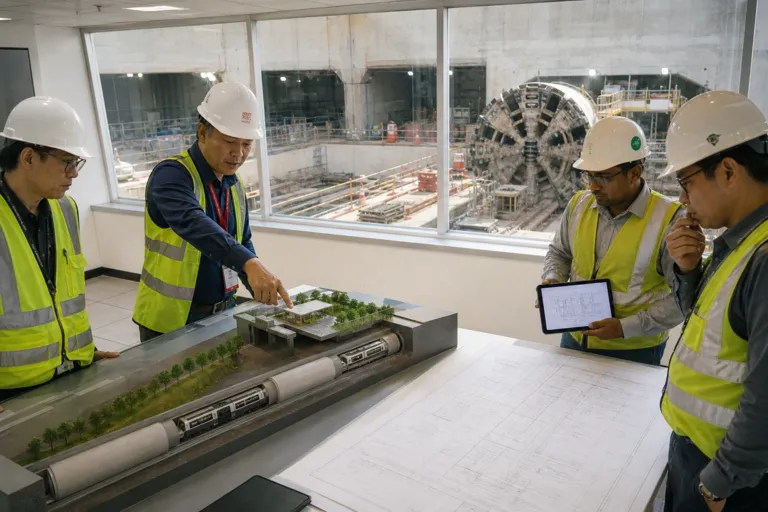
The underground connection is built around three tunnels spanning 2.5km in total. By October 2024, about 1.7km had been completed. Two tunnels are dedicated to the people-mover, while a third tunnel is used for baggage transfer between T5 and T2 at up to 3,000 bags per hour. The tunnels run 28m to 35m below ground, which was described as equivalent to a 12-story building. Construction also required works beneath an active taxiway near T2, and CAG’s Senior Vice President for Changi East construction, Dr. Wen Dazhi, said a top-down construction method and a conveyor-belt system helped minimize disruption and saved one to two years compared with traditional methods.
The T5-to-T2 baggage tunnel was described as Singapore’s largest tunnel dug using tunnel-boring machines when constructed in 2022, with a diameter of 12.3m. It has since been overtaken by other projects, including a Cross-Island Line tunnel stretch between Bright Hill and Turf City at 12.8m wide, and another Cross-Island Line tunnel between the future Tampines North and Defu stations with a diameter of 12.6m. For additional context within Changi itself, the baggage system connecting Terminals 1, 2, and 3 can handle more than 2,700 bags an hour, based on figures cited from the Changi Airport website.
The link sits inside a broader expansion plan. Construction on Terminal 5 officially began in May 2024 and is scheduled for completion in the mid-2030s. Once open, T5 is expected to help raise Changi Airport’s capacity to 140 million passengers annually, which is stated as over 55% higher than its current capacity of 90 million. For travelers curious about how these pieces come together, an immersive exhibition titled ‘T5 In the Making’ is slated to open on January 6, 2026 at Terminal 3’s Arrival Hall, and the free exhibition runs through March 2026. In the bigger picture, airport-focused automated people movers are also highlighted in global market research, where airport applications are anticipated to lead with a 67.0% share in 2026.
How fast will the underground link take passengers from Terminal 5 to Terminal 2?
How often will trains run on the new automated people-mover?
What is the planned train capacity and operating setup?
How does the Changi Terminal 5 automated people mover connect to the rest of the airport?
What is the scope of the tunnel works, including baggage transfer?