
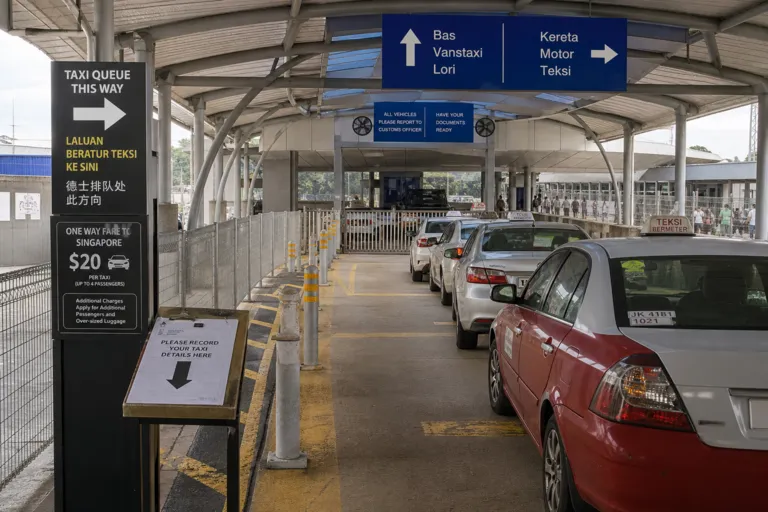
The upgraded cross-border taxi scheme that started on 4 May 2026 changes the feel of a Johor Bahru day trip. A joint statement dated 30 April 2026 from the transport ministries in Singapore and Malaysia confirmed the start date and the core trade-off: much easier drop-offs, but pick-ups that stay tightly managed. Licensed cross-border taxis can now drop passengers off anywhere in Singapore and across approved Johor operating areas. Those areas include Johor Bahru, Iskandar Puteri, Forest City, Kulai, and Senai. For travellers who used to end at Ban San Street Terminal or Larkin Sentral and then transfer again, the new rules aim to reduce transfers and make the last leg simpler.
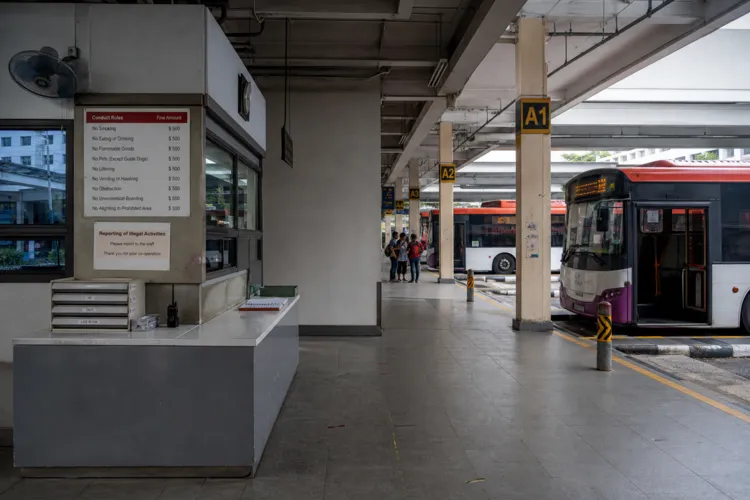
It is still not a free-for-all market, and the “pickup side” is where many plans go wrong. Taxis can pick up passengers anywhere in their home country. But in the other country, pick-ups are controlled and happen through e-hailing or ride-hail bookings at designated pick-up points. Street-hail and ride-hail remain allowed at existing terminal locations such as Ban San Street and Larkin. Designated pick-up points referenced for Singapore include Ban San Street Terminal and designated areas near VivoCity, Century Square, and Joo Koon. In Malaysia, pick-up points referenced include Larkin Sentral, Toppen Shopping Centre, Mid Valley Southkey, and Angsana Mall.
Fares, Distance Rules, and What “More Flexible” Actually Means
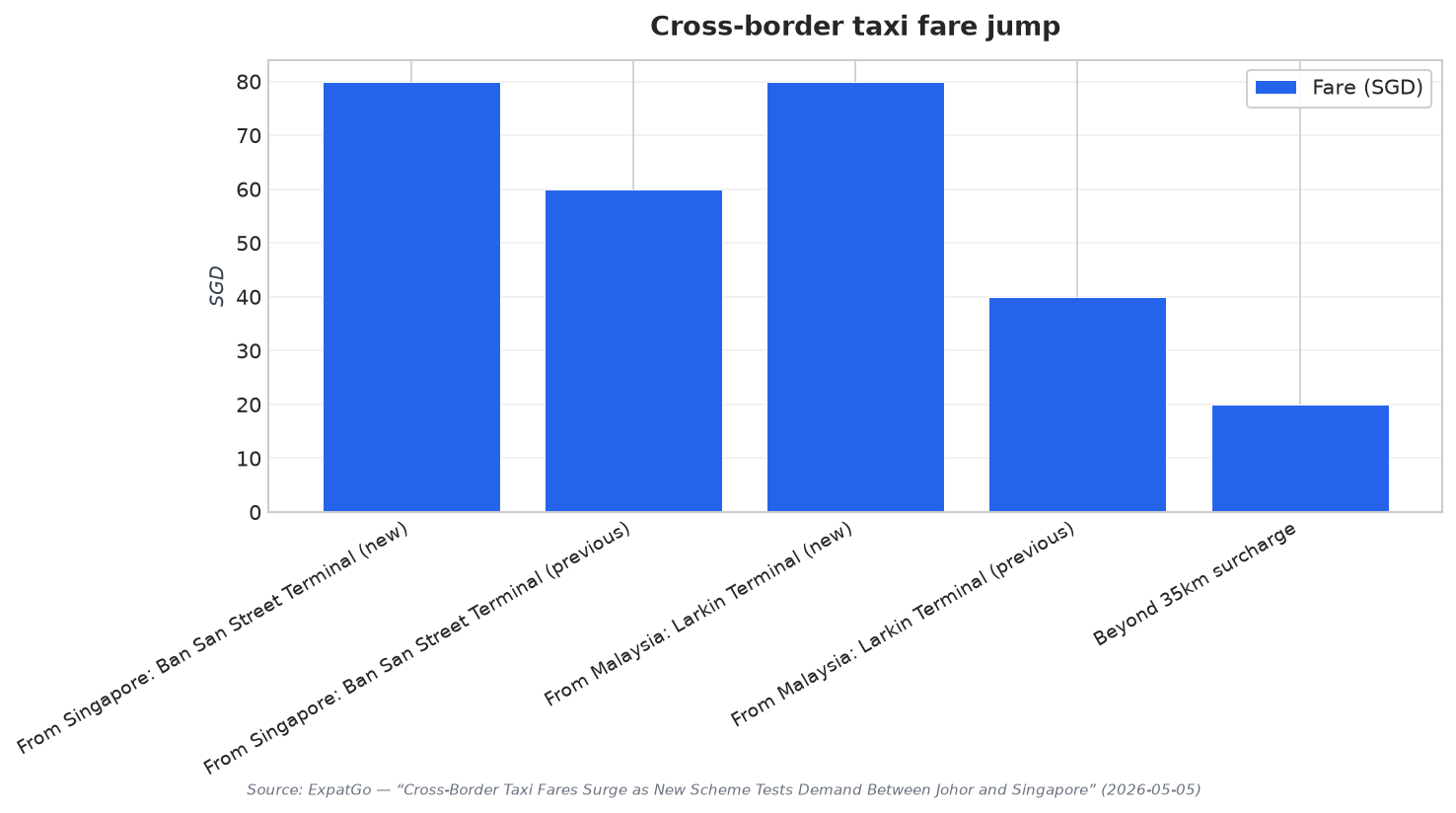
Regulated pricing is now part of the conversation, because the published fares and distance rules affect whether a taxi feels like value. Under the revised structure, a standard four-seater ride costs S$80 from Singapore’s Ban San Street Terminal, or RM240 from Larkin Terminal. The same source notes this is roughly double earlier rates of S$60 and RM120. There is also a 35km limit for the standard fares, with surcharges applying beyond that distance. One report adds that for journeys beyond 35km, an additional S$20 applies. These figures make it easier to compare options, but they also explain why some travellers will still check live queues first, because checkpoint congestion remains.
Ride-hail is also now formally folded into the cross-border framework, rather than sitting in a grey zone. GrabCar has been awarded the first Cross Border Ride Hail Service Operator Licence (CRSOL), valid for three years from 30 April 2026. This enables app-based bookings with fixed pricing under a licensed system, alongside street-hail taxis at terminals. Grab’s Cross-Border SG-JB (Beta) service started rolling out on 4 May 2026, and as of 3 June 2026 it had completed over 1,000 rides. Grab also ran an introductory discount of up to 30% for cross-border rides booked from 29 May to 28 June 2026, and one account described an automatic discount being applied without a promo code.
For travellers, the most practical impact is planning the return leg. Going Singapore to Johor, you can be dropped at an address within the expanded Johor areas, including places beyond central JB such as Kulai and Senai. But coming back, you still need to start from a designated pick-up point in the “foreign” country, rather than summoning a cross-border taxi like a normal domestic ride. Guides also warn that some operational details can change, and advise commuters to verify current operator and pick-up arrangements through official channels such as LTA and APAD or via the booking platform. In that sense, Singapore Johor cross-border taxi rules 2026 make door-to-door drop-offs real, while keeping pick-ups regulated.
What changed on 4 May 2026 for cross-border taxis between Singapore and Johor?
Where can foreign-licensed cross-border taxis pick up passengers?
How much does a standard cross-border taxi cost under the updated scheme?
What is the 35km rule for cross-border taxi fares?
How are the Singapore Johor cross-border taxi rules for 2026 affecting JB trip planning?