
Sengkang General Hospital (SKH) is a public acute care hospital in northeastern Singapore, located at 110 Sengkang East Way, Singapore 544886. It opened progressively to patients on 18 August 2018 and was officially opened on 23 March 2019. SKH is part of the SingHealth cluster and serves mainly residents in northeast Singapore, including Sengkang, Punggol, Hougang, and Pasir Ris. In discussions framed around the Sengkang General Hospital bed expansion 2026 topic, it is important to keep the numbers straight and clearly attributed to their sources, because published bed counts differ across references.
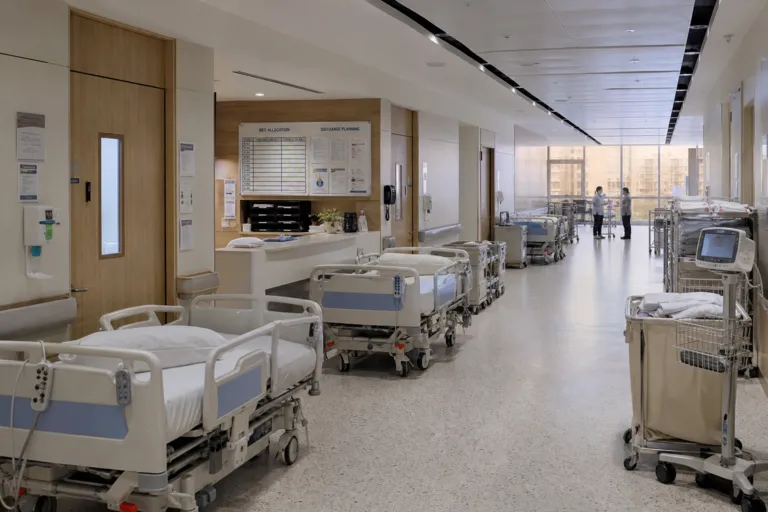
On bed capacity, one set of sources states that SKH has 1,000 beds and that its opening added 1,000 acute beds to Singapore’s public healthcare capacity. Another description of the integrated campus notes that SKH is co-located with the 400-bed Sengkang Community Hospital. In contrast, a neighbourhood guide describes SKH as a 1,400-bed acute hospital under SingHealth that opened in 2018, and separately highlights that “Sengkang General and Community Hospitals” would add 1,400 beds when completed in 2018. Read together, these references indicate that the campus is discussed as a combined capacity story, while SKH itself is also cited as 1,000 beds in multiple listings.
Why Northeast Demand Shapes 2026 Capacity Conversations
Capacity planning in 2026 is not just about a headline bed number. SKH’s catchment area spans Sengkang, Punggol, Hougang, and Pasir Ris. Based on 2020 census figures cited for the respective planning areas, these districts had a combined population of approximately 800,000 residents: Sengkang (249,370), Punggol (174,450), Hougang (227,560), and Pasir Ris (147,110). As of June 2024, that combined resident population is cited as approximately 970,000. These figures provide a concrete reason why “more beds and counting” remains a live question: the community served by SKH has grown in a way that naturally pressures acute and step-down capacity across the integrated campus.
Operational readiness also matters when readers interpret any bed ramp-up narrative. One 2026 hospital-bed statistics overview (global context) cautions that hospital capacity should not be judged by physical bed count alone, emphasizing staffed, operational, and department-ready beds rather than only installed inventory. SKH is also described as using operational technologies such as a real-time locating system for contact tracing and an automated storage system for sterile supplies. Those features do not change bed totals, but they align with the broader 2026 point that usable capacity depends on workflow, staffing, and readiness, not simply the number printed on a brochure.
SKH’s role in 2026 is also shaped by its integrated-care model and partnerships. It is described as offering general hospital services with community-based care, and as partnering with primary care physicians, polyclinics, and intermediate and long-term care providers. As a teaching hospital affiliated with Duke-NUS Medical School, it trains medical professionals and provides a broad set of specialties, while collaborating with national centres including the National Heart Centre Singapore, the National Cancer Centre Singapore, and the National Neuroscience Institute. In May 2026, one company listing places SKH at approximately 1,604 employees on record. Taken together with the campus-bed figures cited across sources, these details frame how a 2026 capacity ramp-up would be supported in practice: through integrated pathways, campus design, and workforce scale.
What bed counts are reported for Sengkang General Hospital and its campus?
Which areas does SKH mainly serve in northeast Singapore?
How does population growth in the catchment area relate to 2026 capacity planning?
When did Sengkang General Hospital open to patients and when was it officially opened?
What does the Sengkang General Hospital bed expansion 2026 topic require readers to watch for beyond physical beds?