
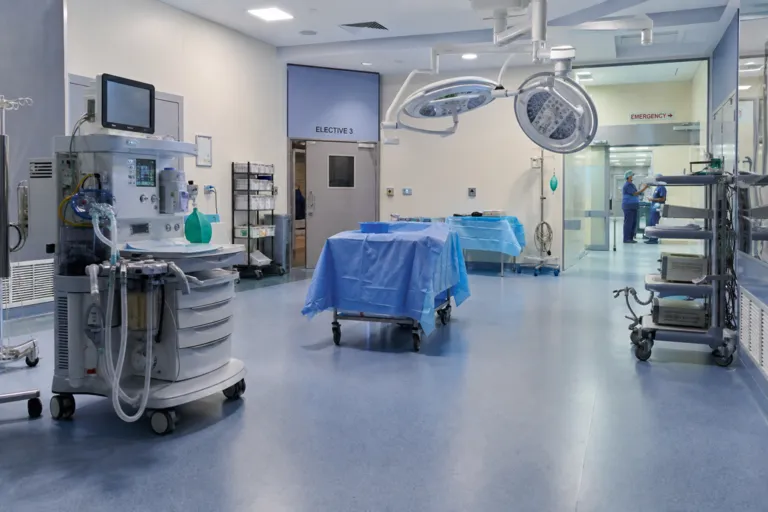
Singapore General Hospital (SGH) is an academic health science centre and tertiary referral hospital in Singapore, and it is operated by SingHealth under the purview of the Ministry of Health (MOH). It is described as the largest and oldest hospital in Singapore and functions as the country’s national hospital. On the SGH campus, four national speciality centres are named: the Singapore National Eye Centre (SNEC), the National Heart Centre Singapore (NHCS), the National Cancer Centre Singapore (NCCS), and the National Dental Centre Singapore (NDCS). A fifth specialty centre, the Elective Care Centre Singapore (ECC), is currently under construction and expected to be completed in 2025. When people search for SGH Elective Care Centre 2027, the intent is often about how a dedicated elective facility fits into longer-term plans to make planned treatment more predictable.
The logic behind an elective centre is closely tied to the idea of separating planned care from emergency pressures. This separation is explicitly framed as a way to increase capacity for planned surgery and diagnostics, reduce cancellations, and cut long waiting times in other health systems. In Wales, for example, the health minister said that increasing capacity for planned surgery and diagnostics and cutting long waiting times by separating planned care from emergency pressures is a key priority for the new government. The same Wales plan also references £145m of investment and a manifesto pledge to create 10 new surgical hubs, with examples including hip and knee replacements, hernia operations, and cataract removals. Those figures are not about Singapore, but they show how other systems justify dedicated elective capacity: to protect scheduled work from the disruption created when emergency demand surges.
Why Separating Planned and Emergency Care Matters
UK backlog reporting helps illustrate what “emergency pressure” can mean in measurable terms, even though the data is from NHS England rather than SGH. The British Medical Association’s analysis cites a median waiting time of 12.4 weeks for patients waiting to start treatment, compared with a pre-COVID median wait of 7.7 weeks in April 2019. NHS England’s 2025/26 priorities and operational planning guidance set an interim target of 65% of patients meeting the 18-week standard for elective treatment by March 2026 and 70% by March 2027. It also notes the Government’s pledge to restore the 92% constitutional standard by March 2029, and a target to reduce the proportion waiting over 52 weeks to less than 1% of the total waiting list by March 2026. These targets underline why systems try to ring-fence elective care: emergency demand can consume beds, staff time, and theatre schedules that planned cases depend on.
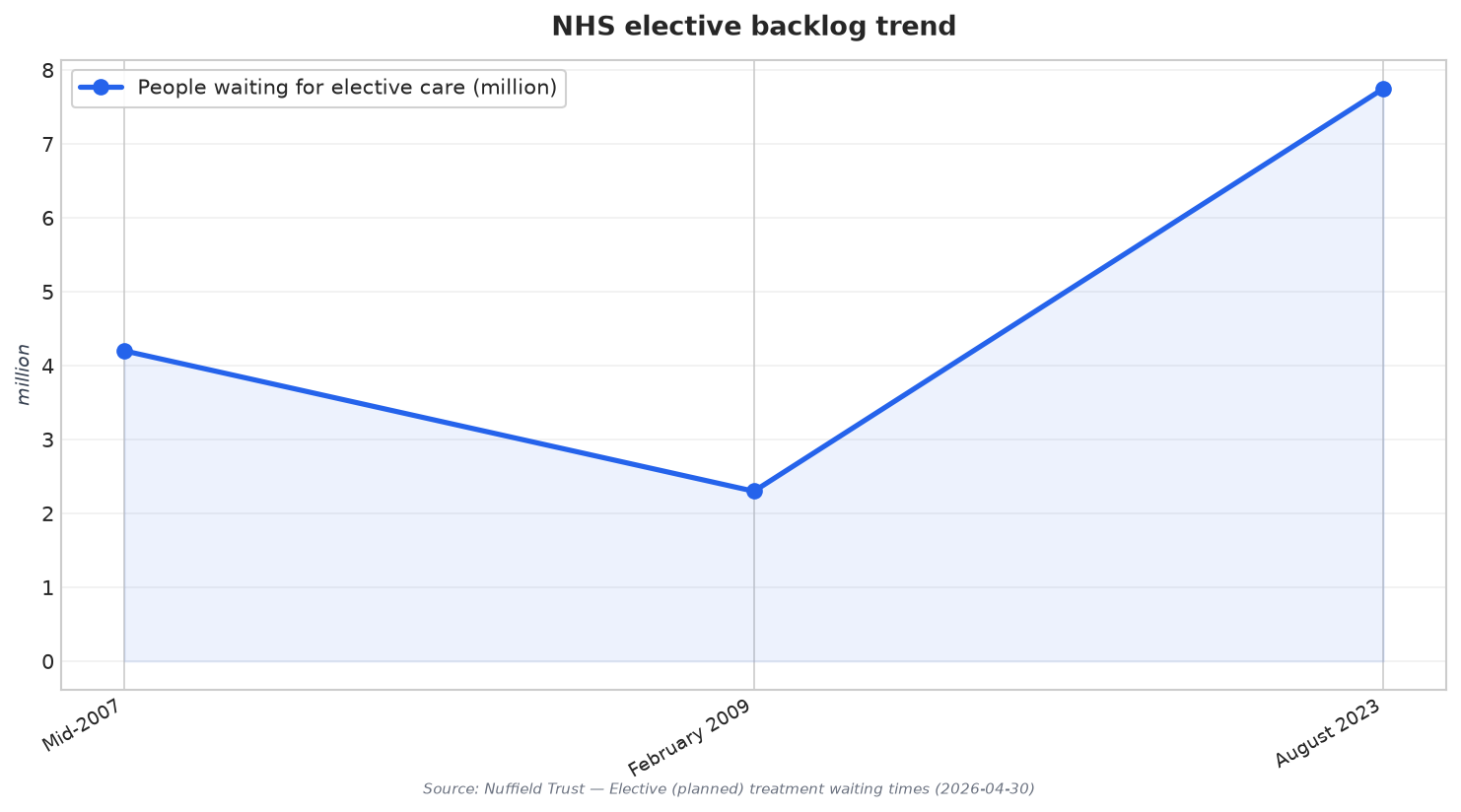
The Nuffield Trust’s tracking of elective waiting times adds further context on how waiting lists can rise and fall over time in England. It states that in mid-2007, 4.2 million people were waiting for elective care, falling to 2.3 million by February 2009, then growing steadily for a decade. From May 2020, the elective waiting list increased rapidly to a peak of 7.75 million people recorded in August 2023. It also notes the system-wide factors that can sustain long waits, including growing demand, availability of funding for extra staff, and bed capacity, which is impacted by the level of demand for emergency care. This is the operational problem an elective-focused facility is designed to soften: when emergency admissions spike, elective work is often the first to be delayed, cancelled, or rebooked.
For SGH, the Elective Care Centre Singapore (ECC) sits within a broader campus model that already includes multiple national specialty centres, and it is being built next to complementary services in the area, including Outram Community Hospital (OCH) and Outram Polyclinic. The Wikipedia entry describes OCH as a supplementary community and rehabilitation hospital to SGH for newly discharged patients, while the polyclinic complements outpatient care. Within that ecosystem, a dedicated elective centre is positioned to support a more structured planned-care pathway, even when emergency activity fluctuates elsewhere on the hospital campus. While the sources do not publish SGH-specific waiting-time figures, the international comparisons show why separating planned and emergency streams is repeatedly presented as a practical route to fewer cancellations and shorter waits for scheduled treatment.
What is the Elective Care Centre at SGH, and when is it expected to be completed?
How does separating planned care from emergency pressures help reduce waiting times?
What does NHS England data show about elective waiting pressures (as context, not Singapore data)?
How large did England’s elective waiting list get, according to the Nuffield Trust?
What are people usually asking when they search for SGH Elective Care Centre 2027?