
Singapore’s role as a major marine fuel hub is now being tested by the shift to alternative fuels. In 2024, the country supplied 54.92 million tonnes of marine fuel, up 6% from the previous year. Another data point reinforces the trend: Singapore sold 56.77 million tonnes of marine fuel in 2025. At the port level, this scale makes reliability, testing, digital bunker operations, and multi-fuel infrastructure a strategic priority, not a side project. It also explains why Singapore is sequencing its transition, using methanol as a near-term pathway while preparing ammonia through defined trials and technical references.
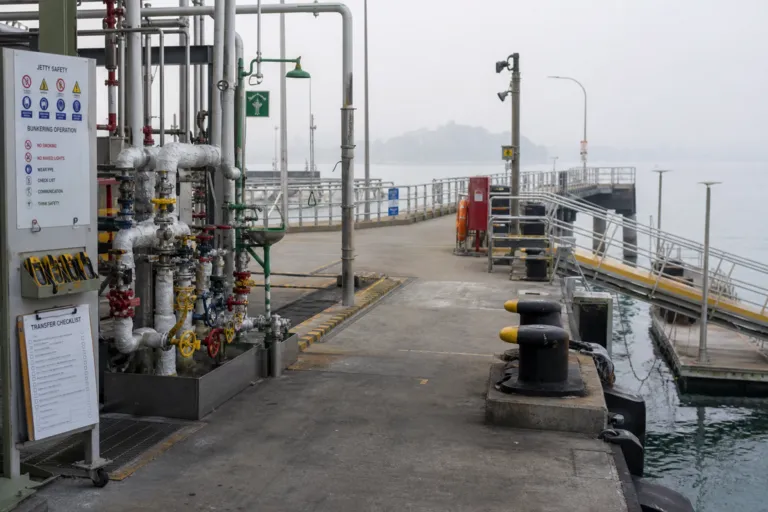
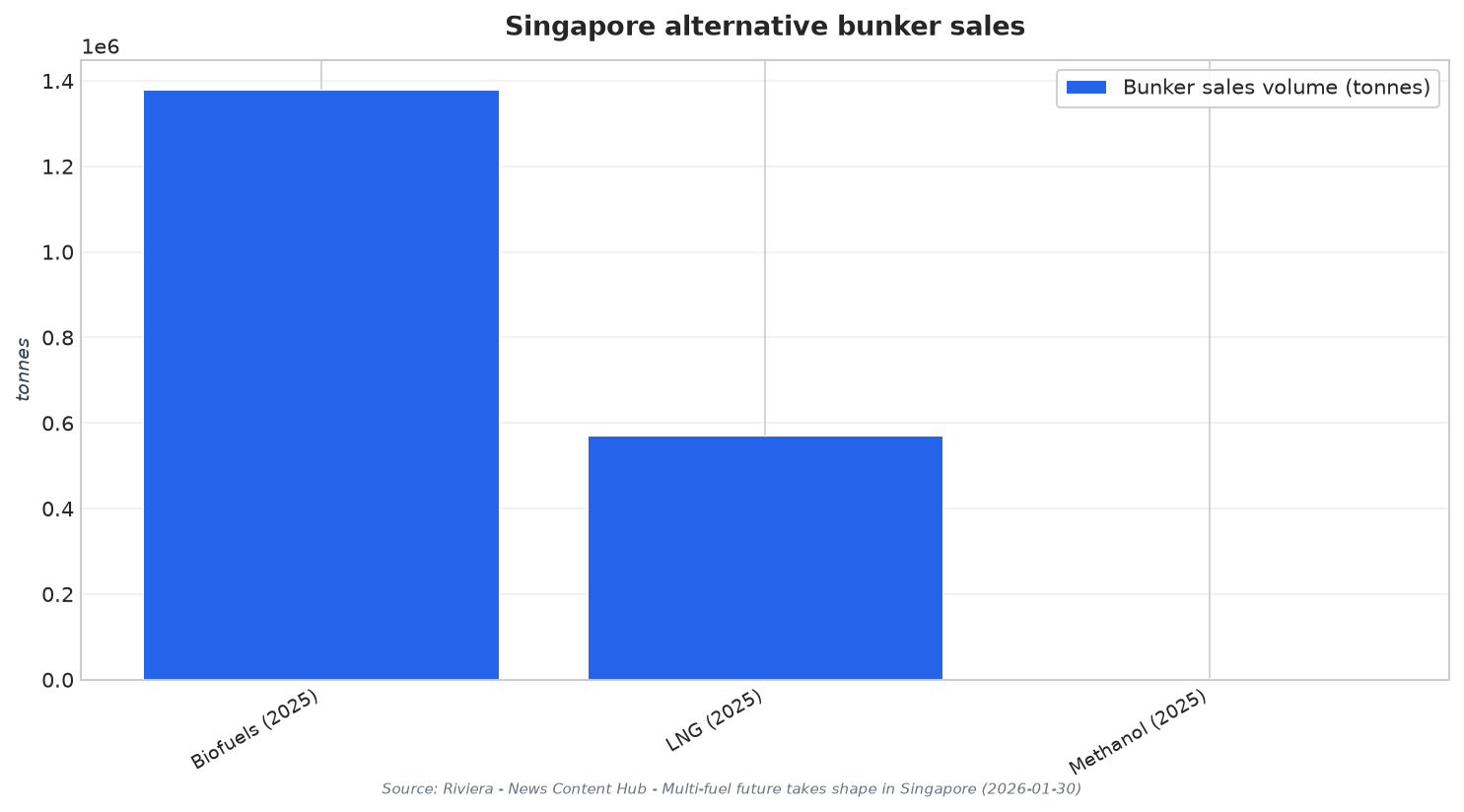
On methanol, activity has moved beyond theory and into operations. In 2024, the Port of Singapore bunkered 1,626 tonnes of methanol, and Tuas Port was declared ready for commercial methanol bunkering after completing its first simultaneous bunkering and cargo operation. In 2025, methanol bunker volumes rose again, with sales reported at 3,000 tonnes, alongside alternative fuel gains in biofuels and LNG. During a documented delivery, the vessel Brave Pioneer received 300 metric tonnes of methanol ahead of its maiden voyage to Europe. This work has been shaped by Technical Reference 129 on Methanol Bunkering, introduced in 2025, which defines procedures for safe transfer and handling and supports ship-to-ship transfers.
From Methanol Rules to Ammonia Readiness at the Port
Ammonia is now lining up behind methanol, but with stricter safety and infrastructure needs. In 2025, no ammonia bunker sales were recorded by the Port of Singapore, even as the port conducted its first live ammonia trial in 2024. Plans call for publishing Singapore’s first Technical Reference for Ammonia Bunkering in Q2 2026, a key marker for the Singapore ammonia bunkering 2026 timeline that many stakeholders are watching. Separately, Singapore has issued its first authorization for ammonia bunkering trials, with Itochu’s dedicated ammonia bunker vessel expected to commence operations in late 2027, and demonstration trials slated for late 2027.
This staged approach sits inside a wider compliance and licensing framework. The Maritime and Port Authority of Singapore enforces bunker licensing and mass flow meter mandates, while the IMO’s MARPOL Annex VI sulfur rules shape conventional fuel specifications. Singapore’s bunker fuel market still centers on ISO 8217 residual and distillate grades, with sulfur capped at 0.50% mass fraction for conventional grades and 0.10% for emission control areas. At the same time, alternative fuel planning is accelerating because stakeholders must monitor ammonia and methanol pilot projects to anticipate which infrastructure warrants early commitment, especially when ammonia bunkering introduces a defined “infrastructure gap” that includes cryogenic storage and toxic gas handling.
Investment narratives are also forming around the same sequencing logic: prove methanol handling at scale, then extend the playbook to ammonia with stronger safeguards. One outlook projects methanol demand could reach 1 million tonnes per year by 2030, and expects total investments in alternative bunkering, port upgrades, and vessel retrofits to exceed US$5 billion by the end of the decade. The push is reinforced by international targets referenced in Singapore’s planning context, including the International Maritime Organization’s 2023 emission targets calling for a 40% reduction in carbon intensity and at least 5% adoption of zero or near-zero fuels by 2030. For port operators and bunker suppliers, the practical takeaway is that methanol momentum is already measurable, while ammonia is moving through trial authorization and a technical reference pathway designed to make commercial operations possible.
What do the latest figures say about Singapore’s marine fuel scale?
How much methanol has Singapore already bunkered at the port?
What is the timeline people mean when they talk about Singapore ammonia bunkering in 2026?
Has Singapore authorized ammonia bunkering trials, and when do operations start?
Which methanol standard is already in place for Singapore bunkering operations?