
Singapore’s anti-vaping position is not new, but 2026 marks a clear escalation in how the country punishes and enforces offences. Vaping was banned in Singapore in 2018, covering the purchase, possession, and use of vapes. What changed is the scale of penalties and the breadth of scenarios the law is designed to capture. From May 1, 2026, the Tobacco and Vaporisers Control Act (renamed from the earlier tobacco law) strengthens action against possession, use, import, and supply of vaporisers. In practical terms, it turns vaping from a risky habit into a high-stakes legal exposure for residents and travellers alike.
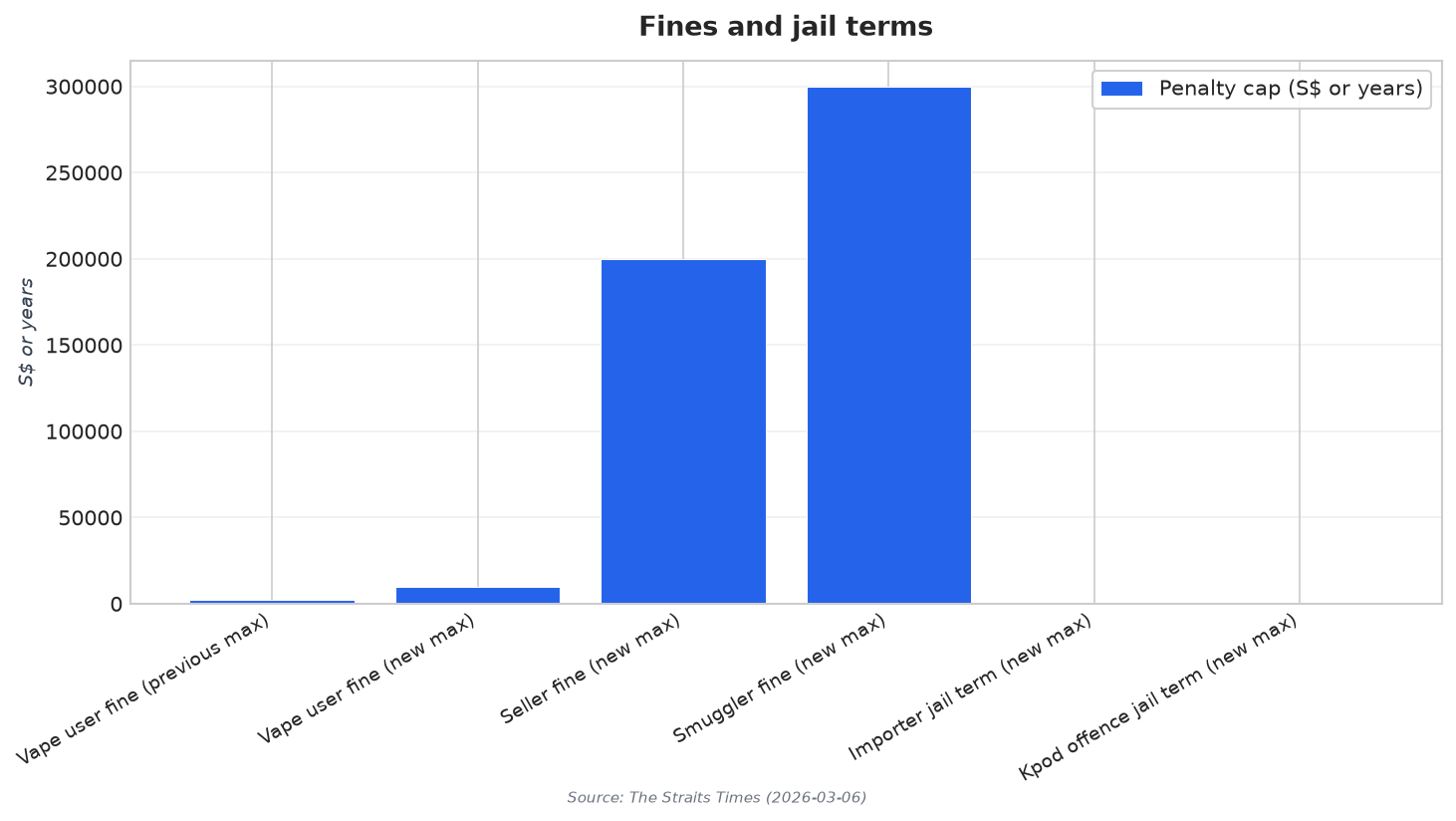
The headline shift is the fine for individual users. Under the amended law, vape users face fines of up to S$10,000, up from S$2,000 previously. The same law also pushes far tougher outcomes up the supply chain. Sellers can face fines of up to S$200,000 and up to six years’ jail. Importers and smugglers face mandatory jail terms of up to nine years and fines of up to S$300,000. This is the core story behind the Singapore Kpod etomidate vape law 2026: higher penalties for everyone involved, and an explicit focus on products and behaviour that authorities see as especially harmful.
Why Kpods (Etomidate Vapes) Sit at the Center of the Crackdown
The 2026 updates do more than increase fines. They also single out Kpods, described as vapes laced with the anaesthetic agent etomidate. The Straits Times reported that on July 20, 2025, Health Minister Ong Ye Kung said the authorities were working to list etomidate under the Misuse of Drugs Act after one in three confiscated vapes was found to be a Kpod. Under the new anti-vaping laws, adults who involve young people or vulnerable persons in smuggling or supplying Kpods can be jailed for up to 20 years and given up to 15 strokes of the cane. Separately, any adult who has a Kpod but does not try to prevent a young person from using it can be jailed for up to 10 years.
Enforcement is also being framed as more proactive and less forgiving. For travellers, reporting indicates the law applies even to those transiting Changi Airport without entering Singapore, and it covers e-cigarettes, vape liquids, spare batteries, and empty pods. Air Traveler Club also reported that enforcement at Changi Airport intensified 30% since 2025, and its monitoring flagged 1,200+ vape detections annually at SIN, with checked baggage undergoing CT scanning. For drivers entering Singapore, The Straits Times noted that those found with vapes in their vehicles can no longer claim they did not know the devices were there to avoid legal responsibility; instead, the onus is on them to prove they did not know.
In regional context, Singapore is not alone in Southeast Asia’s restrictive direction, but its penalty structure stands out. Travelbinger notes Vietnam’s Resolution 173/2024/QH15 bans production, trade, import, storage, transport, and use of these products from 2025, with a decree effective from December 31, 2025 setting fines of VND 3 million to VND 5 million for users. That comparison is useful because it highlights how Singapore’s approach combines a long-standing ban (since 2018) with a 2026 penalty overhaul that dramatically raises maximum fines and strengthens powers against Kpods, smuggling, and situations involving young people or vulnerable individuals.
What changed for vape users in Singapore in 2026?
What penalties apply to sellers and importers under the new law?
How does the Singapore Kpod etomidate vape law shift in 2026 target Kpods specifically?
Does Singapore enforce vaping rules on transit passengers at Changi Airport?
When did Singapore ban vaping in the first place?