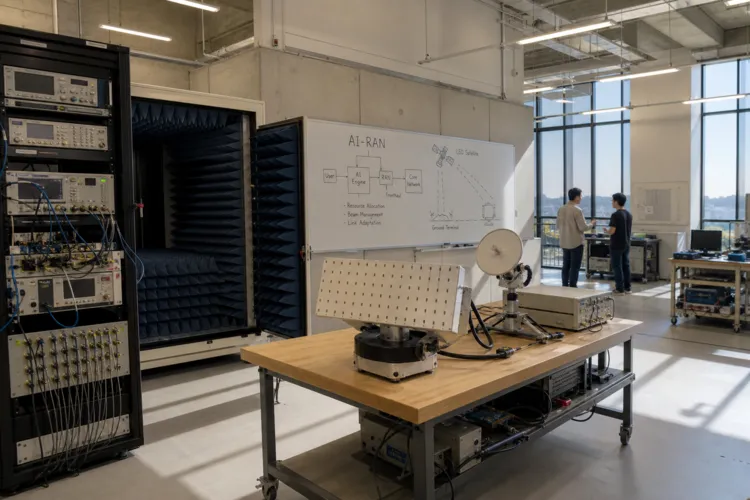

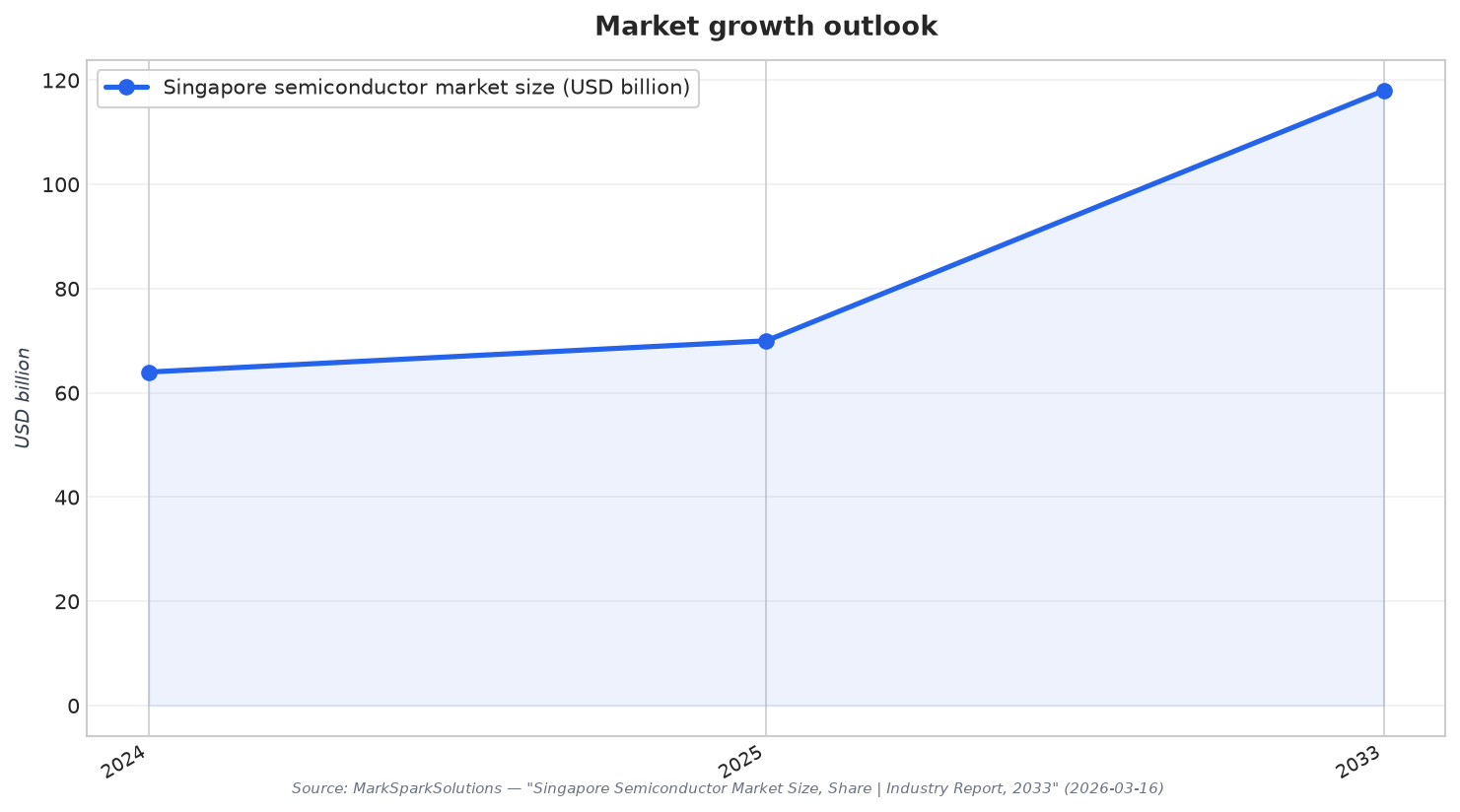
Singapore is tightening its grip on the global chip supply chain as AI infrastructure spending accelerates. In 2024, the Singapore semiconductor industry was valued at USD 64 billion, and it increased to USD 70 billion in 2025, reflecting what the report describes as a recovery in global chip demand and AI-led capital expenditure cycles. That same report projects the market will reach USD 74 billion by 2026. The ambition is not confined to one niche. The country hosts front-end fabrication, back-end assembly and testing, equipment manufacturing, and R&D within one region, giving it multiple levers to stay relevant as AI chips and the data center buildout drive demand.
Scale matters, and the sources frame Singapore as globally meaningful on both chip output and the tools used to make chips. CNA reports that Singapore produces about one in every 10 chips worldwide and accounts for around one-fifth of global semiconductor equipment output. CNA also states the industry contributes about 6% of Singapore’s GDP and employs more than 35,000 people. The market report echoes these figures, adding that nine of the top 15 semiconductor firms worldwide have operations in Singapore. This concentration supports resilience when supply chains are being reshaped, including by the technology rivalry between the United States and China, which CNA notes has pushed companies to diversify operations across Asia.
Exports and Ecosystem Signals Are Converging in 2026
Trade data in 2026 is reinforcing the idea that Singapore is plugged into the AI hardware surge, not watching from the sidelines. According to CryptoBriefing, non-oil domestic exports (NODX) surged 38.4% year-on-year in May 2026, while electronics shipments jumped 94.8%. Within electronics, integrated circuits climbed 80.9%, disk media products rose 227.8%, and PCs increased 140.9%. The same source points to Taiwan, South Korea, and the United States as primary destinations where shipments surged, framing these markets as central to the global semiconductor and AI hardware ecosystem. CryptoBriefing also argues the breadth of products—memory chips, GPUs, networking equipment, servers, storage media, and cooling infrastructure—helps explain why growth is broad-based rather than concentrated in a single category.
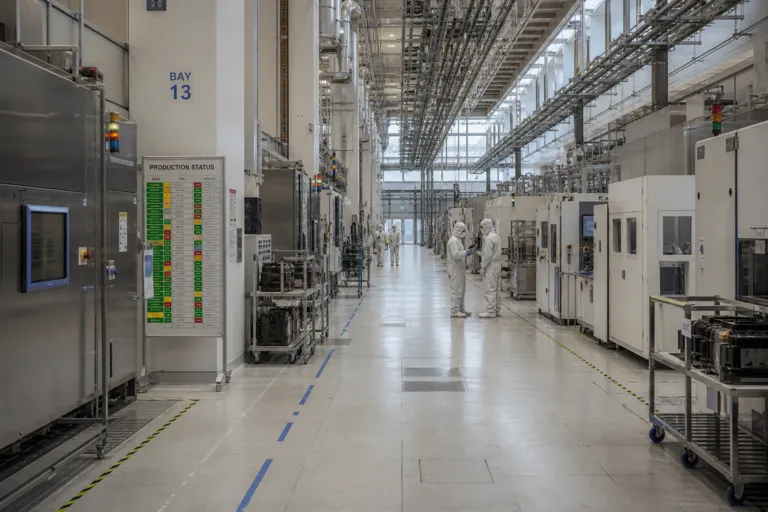
On the manufacturing side, Singapore’s role spans wafer fabrication and downstream capabilities that matter for AI chips. CNA reports that GlobalFoundries and Micron, as well as Taiwan’s United Microelectronics Corporation (UMC), operate wafer fabrication plants in Singapore, producing chips for industries ranging from automotive to AI. Separately, ETCIOSEA describes Singapore as a critical node in GlobalFoundries’ supply chain and says the city-state’s infrastructure, workforce, and pro-business policies have attracted global chipmakers, naming TSMC, Micron, and Infineon. The same ETCIOSEA piece links expanded manufacturing capabilities in Singapore to faster rollout of AI-enabled hardware across sectors such as logistics, healthcare, and mobility, where access to efficient chips produced at scale is positioned as essential for next-generation applications.
Policy and long-horizon investment are another anchor in the Singapore semiconductor supply chain for AI chips in 2026, because the ecosystem depends on R&D and skilled labor as much as factories. CNA says the government has committed S$37 billion (US$29 billion) under its Research, Innovation and Enterprise 2030 plan to strengthen capabilities in strategic sectors, including advanced manufacturing and semiconductors. The market report adds that the industry has attracted over S$18 billion in semiconductor-related investments in recent years. It also states Singapore has over 35,000 skilled workers and around 15,000 STEM graduates entering the workforce each year. Together, these signals show why Singapore’s AI hardware role is framed as structural: it is built on output, equipment, exports, firms, and a pipeline designed to keep the supply chain credible as AI demand intensifies.
How is Singapore positioned in the global semiconductor supply chain for AI chips in 2026?
What do the latest figures say about Singapore’s semiconductor market size and outlook?
Which chipmakers are cited as operating wafer fabs in Singapore?
What export metrics in 2026 point to AI-driven electronics demand?
What public investment is highlighted to support advanced manufacturing and semiconductors?