
Singapore has launched a S$30.4 million consortium research programme to develop and deploy lower-carbon construction technologies across the built environment. The three-year effort is led by the Singapore Institute of Technology (SIT) in partnership with A*STAR, construction and civil engineering firm Woh Hup, and other industry partners, and it was announced at the Construction Technology Innovation Laboratory (CTIL) annual seminar at SIT’s Punggol Campus on Oct 1. It is supported under Singapore’s Research, Innovation and Enterprise 2025 (RIE2025) plan, and it is framed as one of the largest private-sector research and development investments in the built environment sector so far.
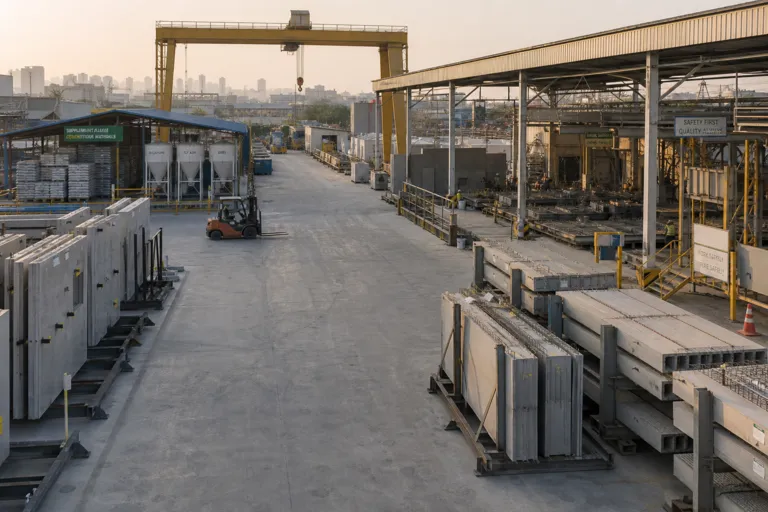
The programme—named the Woh Hup-SIT-A*STAR Consortium Research Programme for Sustainable Construction Technology—will take on seven research projects. They span sustainable construction materials, innovative substructural systems, and low-carbon structures and reusability. Public remarks tied the research agenda to areas where the built environment sector has clear needs, including scaling up ultra-low carbon concrete production, developing AI-enabled design and optimisation tools, transforming demolition waste into useful construction materials, and enabling the reuse of structural steel. The intended outcomes include reducing embodied carbon, improving productivity and resource efficiency, and strengthening the resilience of Singapore’s construction supply chain.
From Lab to Site: What the Seven Projects Aim to Prove
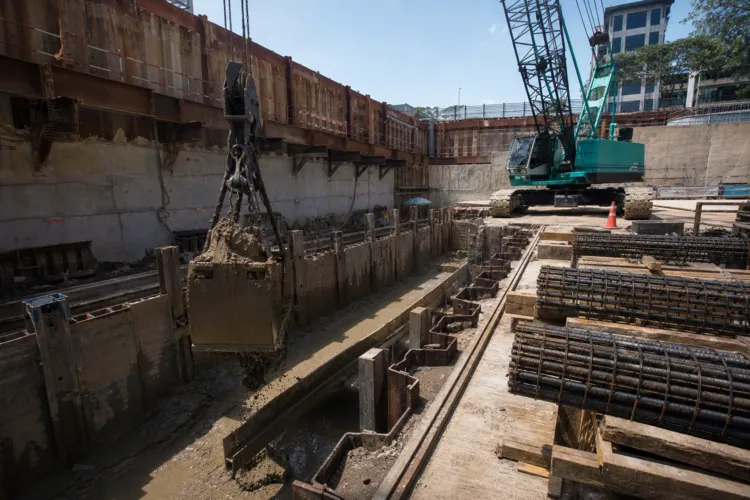
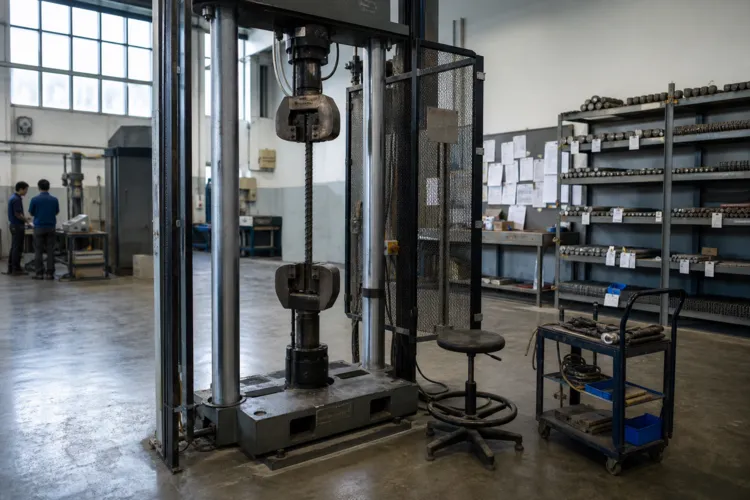
Several projects are explicitly designed to move quickly from research to deployment. Industry partners are expected to contribute project sites, operational expertise, and validation environments so technologies can be assessed under actual construction conditions. One stream of work focuses on scaling up SIT’s ultra-low embodied carbon concrete technology from CTIL’s first phase. That concrete has demonstrated up to a 65% reduction in embodied carbon, and the new phase will focus on further development, validation, and testing with industry partners. Another stream will develop AI-powered design tools to help engineers optimise structural designs for lower embodied carbon, lower material use, and lower costs in structural design.
The consortium has an outcome target with a clear time horizon. By 2029, it aims for up to a 40% reduction in embodied carbon in relevant urban development applications using the programme’s technologies, compared with conventional construction approaches. The programme also aims to generate new business opportunities and operational cost savings for participating industry partners. In parallel, it includes training for undergraduate and postgraduate students and research staff through applied projects with industry partners, plus capability-building options for industry professionals through specialised training, industry attachments, and technical seminars.
This new effort builds on CTIL, SIT’s applied research platform for sustainable construction technologies, established in 2021 to work with construction companies on industry challenges and test technologies under real operating conditions. From 2021 to 2026, CTIL completed 13 applied research projects with 26 industry partners, and five technologies have progressed to deployment on construction projects. CTIL-developed ultra-low carbon concrete has been deployed in projects including condominium developments Copen Grand and Lumina Grand, as well as the upcoming Union Square. For readers tracking the Singapore construction research consortium involving Woh Hup, SIT, and A*STAR, the announced programme is positioned as the next step: shortening the path from research and development to on-site use.
How much funding is committed to the new consortium research programme?
What is the embodied-carbon reduction target, and by when?
What kinds of projects are included in the seven-project research plan?
What results has CTIL delivered before this new programme?
What is the Singapore construction research consortium involving Woh Hup, SIT, and A*STAR trying to change on construction sites?