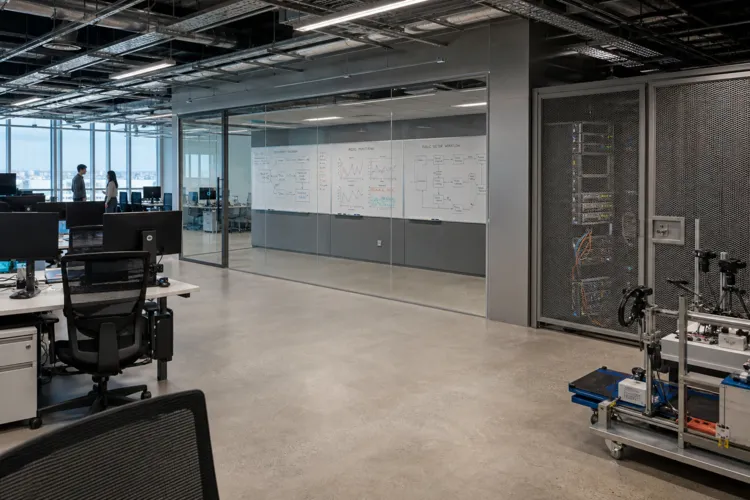

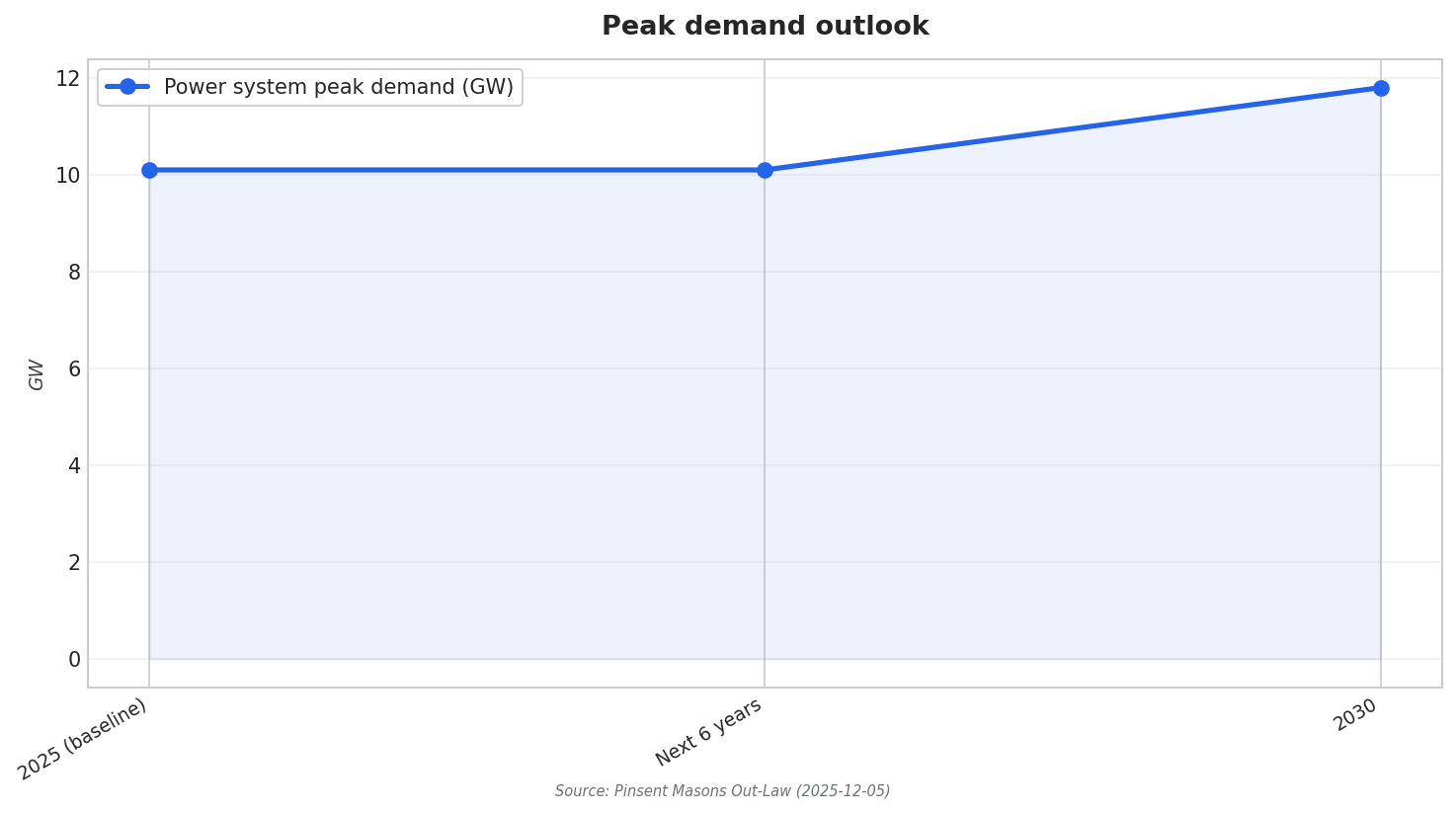
Singapore’s power transition is being designed around rising demand and a system that still relies heavily on natural gas. In the first half of 2025, about 93% of Singapore’s electricity was generated using natural gas, and the Energy Market Authority (EMA) has stressed that gas-fired plants remain essential for stable baseload power as intermittent renewables scale. Electricity demand is being pushed up by electricity-intensive sectors, including advanced manufacturing, the digital economy, and transport. EMA forecasts show peak demand rising by at least 3.7% in the next six years to reach 10.1 GW, before increasing further to 11.8 GW by 2030. Against that backdrop, the government’s long-term decarbonisation direction includes hydrogen, with Singapore aiming to utilise hydrogen as a fuel from 2035 as it works toward net zero by 2050.
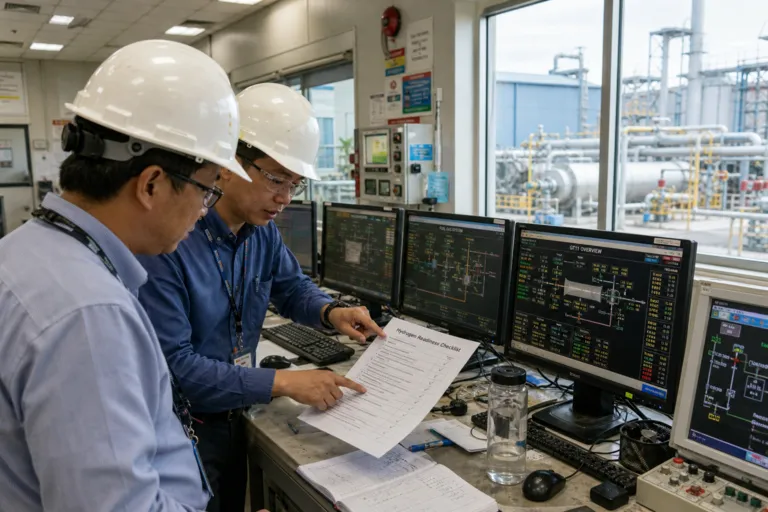
Hydrogen-readiness is being embedded directly into new capacity, so plants built for today’s gas system can shift later as low-carbon fuels become available. Under the hydrogen-ready power plants programme, each facility must be able to operate with at least 30% hydrogen by volume. New or repowered plants must meet this hydrogen-compatibility baseline and be able to be retrofitted to run entirely on hydrogen in the future. The same programme also sets an emissions threshold of 0.355 metric tons of CO2-equivalent per MWh at a 75% load factor. This approach reflects a practical assumption stated by industry observers: Singapore continues to rely on gas to meet most of its energy needs, while expecting hydrogen production to develop so the fuel can be imported and used by these plants to reduce emissions and support net zero targets.
What the Next Wave of Hydrogen-Ready Plants Means for the Grid
EMA has invited the private sector to build, own, and operate two new hydrogen-ready combined cycle gas turbine (CCGT) generating units, as part of a centralised process to guide new generation capacity. These two plants are expected to be operating by 2029 and 2030. The same reporting states that the proposals would bring Singapore to a minimum of nine hydrogen-compatible plants by 2030, following other announced developments such as Keppel Sakra Cogen (600 MW) and Sembcorp Cogen (600 MW), expected to be completed in 2026, and a YTL PowerSeraya (600 MW) plant expected to be completed in 2028. Separately, Singapore is also planning up to three additional hydrogen-compatible natural gas power plants by 2032, with proposals for a 2031 plant due by June 24, 2026, and submissions for 2032 projects expected by September 30. EMA has said there will be no revenue support mechanisms under the tender, and bidders must demonstrate financial capability.
Fuel supply and infrastructure are the next constraints, so Singapore is studying import routes, storage, processing, and safety requirements. At Senoko Power Station, commissioned in 1976, studies are underway to explore importing hydrogen from Malaysia. Senoko Energy and Gentari signed a memorandum of understanding in October 2024 to assess the feasibility of transporting hydrogen via existing pipelines, linked to a 20-year supply agreement expected to start by 2029. The concept involves pipelines carrying a blend of 95% natural gas and 5% hydrogen, though concerns remain about whether existing pipelines are suitable for hydrogen blends due to material and safety issues. Hydrogen’s high combustibility, leak risk, and the fact it is colourless and odourless create operational challenges, while cost is also a hurdle: one industry representative cited hydrogen as currently estimated to cost more than five times the price of natural gas. EMA has said it is studying legislative frameworks, infrastructure needs, and safety standards, including codes of practice for transport, storage, and use, and evaluating potential import facilities, storage and processing terminals, and distribution networks.
In the longer term, policy signals keep the option value of hydrogen high, even as today’s system remains gas-led. Singapore’s 2022 National Hydrogen Strategy states that low-carbon hydrogen could meet half of the nation’s power needs by 2050. The power sector also matters because around 40% of Singapore’s greenhouse gas emissions are produced by the power sector, making fuel switching and emissions thresholds central to decarbonisation plans. Industry commentary also points to low-carbon ammonia supply chains as part of the pathway, including ammonia cracking facilities and storage and handling infrastructure, because ammonia is easier to transport and store than hydrogen and may play a key role. Taken together, this is the core of Singapore hydrogen strategy power planning: grow demand-driven capacity, require hydrogen compatibility now, and accelerate import, safety, and infrastructure readiness so cleaner fuels can scale as global supply chains mature.
How does Singapore’s hydrogen strategy shape power planning toward 2050?
What hydrogen compatibility is required for new or repowered power plants?
What emissions threshold applies to the hydrogen-ready power plants programme?
What are Singapore’s near-term milestones for hydrogen-ready generation capacity?
What is being studied for hydrogen imports and what are the hurdles?