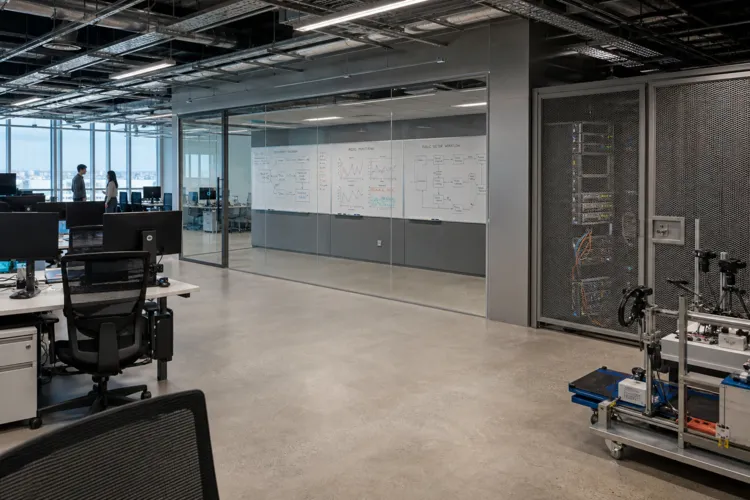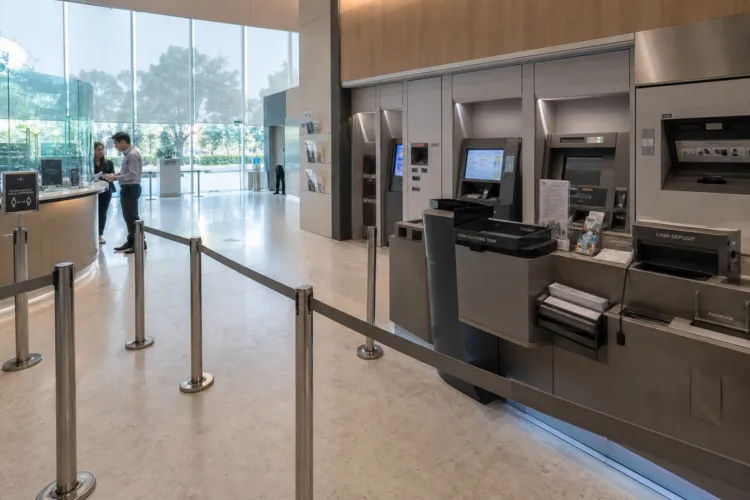

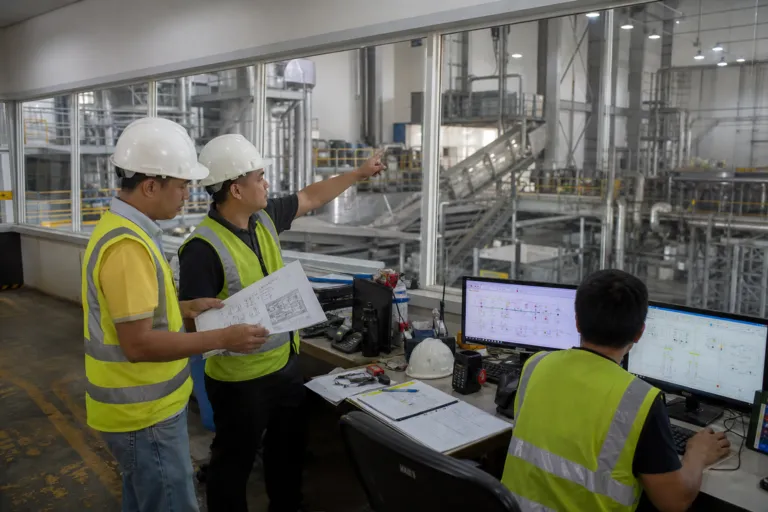
At Tuas, Singapore is building an integrated approach to two city essentials: treating used water and managing solid waste. The Tuas Nexus complex co-locates the National Environment Agency’s (NEA) Integrated Waste Management Facility (IWMF) with the Tuas Water Reclamation Plant (TWRP), aligning water and waste operations in one site strategy. The aim is not just disposal or treatment. It is to recover resources and support energy self-sufficiency through links between processes. One described integration is co-digestion, where sludge from used-water treatment combines with sorted food waste to boost biogas yields, helping the overall nexus target full energy self-sufficiency while reporting projected annual carbon savings north of 200,000 tonnes.
On the water side, TWRP is designed around a membrane bioreactor (MBR) system, described as one of the world’s largest MBR facilities, with a treatment capacity of 800,000 m3/day. The stated MBR process combines biological wastewater treatment to break down organic matter, then membrane filtration to remove suspended solids and microorganisms. This technology choice is also presented as a land-efficiency lever: the MBR-enabled design is described as having a 30% more compact land footprint compared with conventional treatment plants. In a land-constrained context, that footprint reduction is part of why the nexus is framed as a model that bundles performance and siting efficiency together.
What Makes Tuas Different: Integration, Scale, and Delivery Discipline
On the waste side, Singapore is also expanding the IWMF program. NEA appointed a joint venture of AECOM, Binnies, and Ramboll to provide multi-disciplinary consultancy services for Phase 2, covering planning, design, procurement support, construction supervision, and testing and commissioning. Phase 2 is planned to handle up to 2,900 tonnes of waste daily, supporting energy generation from waste and the recovery of resources, and it “may also incorporate future carbon capture capabilities.” The consultancy team’s project background is positioned as deep: their global experience spans the delivery of over 200 waste-to-energy projects, and they also served as Owner’s Engineer in Phase 1, which remains underway.
Delivery at Tuas is also framed as a digital coordination problem solved at scale. The TWRP project required integrating information across more than 20 contract packages, interfacing six major treatment process facilities, and coordinating large model sets: over 2,400 native Building Information Modelling (BIM) models during design, and 20 contractors during construction with over 3,500 native BIM models and 150 federated models. A digital twin was established using the Bentley iTwin Platform as a cloud-based environment for collaborative, federated modelling. Reported delivery benefits include a 50% reduction in traditional timelines for the multidisciplinary design tendering process, a 75% reduction in model federation time, and a 5% reduction in projected capital expenditure, alongside 200 project personnel upskilled on the platform.
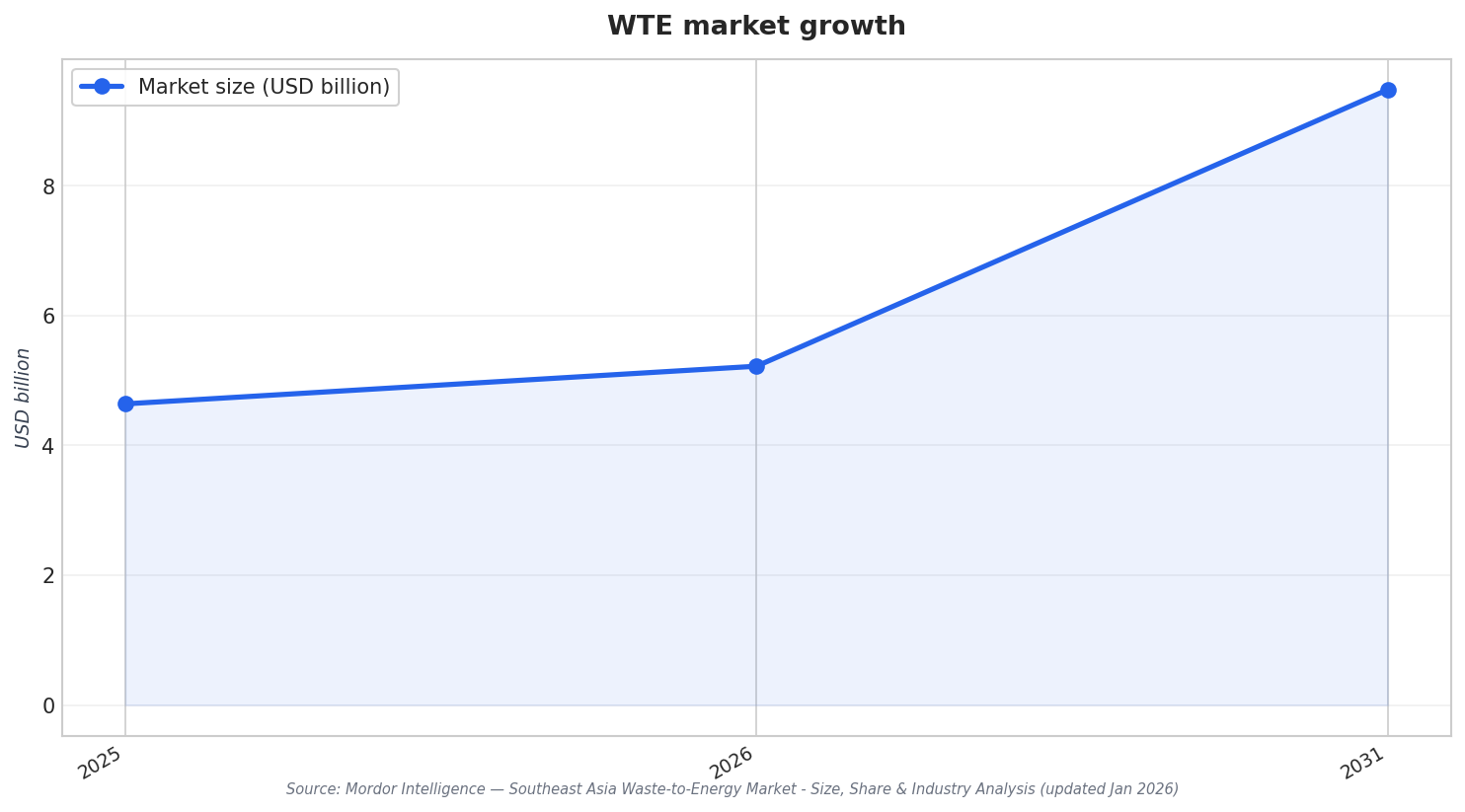
As regional context, Southeast Asia is seeing stronger demand signals for converting waste into energy. Mordor Intelligence forecasts the Southeast Asia waste-to-energy market to increase from USD 4.64 billion in 2025 to USD 5.22 billion in 2026, reaching USD 9.48 billion by 2031, with a stated CAGR of 12.65% over 2026–2031. The same report notes that thermal technology led with a 62.1% share in 2025, while biological technology is projected to record the highest CAGR at 14.3% through 2031. Against this backdrop, the Tuas Nexus integrated facility stands out not for being “a” waste-to-energy asset, but for showing how co-location and process integration can be designed alongside future-ready options like carbon capture consideration.
What is Tuas Nexus, and why is it considered integrated?
What capacity is the Tuas Water Reclamation Plant designed to treat?
How much waste is IWMF Phase 2 planned to handle each day?
How is digital delivery being used on the Tuas project?
How do regional waste-to-energy trends relate to the Tuas Nexus integrated facility?