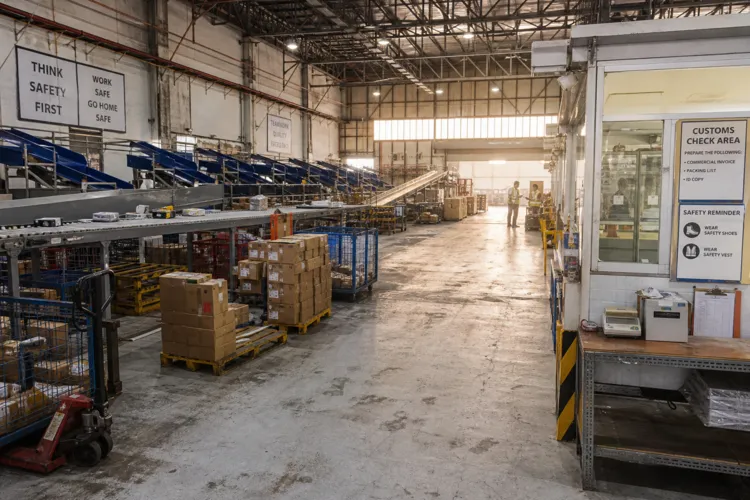

Smart ports are no longer a niche concept. They have become a practical playbook for handling congestion, supporting greener operations, and improving day-to-day reliability. That makes the smart-port theme a natural fit for Singapore Maritime Week 2026 smart ports discussions, because Singapore’s port ecosystem is operating at huge scale while pushing modernization. In 2024, Singapore recorded a container throughput of 41.12 million TEU, and about 85% of that volume was transshipment cargo. In the same year, yearly vessel arrival tonnage reached 3.09B GT. Those volumes help explain why the conversation is increasingly about automation, real-time coordination, and systems that reduce delays and friction across port calls.
The business backdrop is also strong in Singapore. Mordor Intelligence estimates the maritime sector in Singapore at USD 15.41 billion in 2026, up from USD 14.78 billion in 2025, with a projection of USD 18.97 billion by 2031 at a 4.25% CAGR over 2026–2031. Within that, Port and Terminal Operations held 40.78% market share in 2025. Container vessels accounted for 47.92% share by vessel type in 2025. These shares underline why smart port operations matter: they sit at the center of value creation in a hub where mega-containership traffic and transshipment performance can swing overall competitiveness.
Green Shipping Meets Digital Operations
Green shipping themes are also tied to digital workflows, because cleaner fuels and tighter compliance create new documentation and coordination needs. Singapore’s 2024 bunker volumes were 54.92 million tonnes, reinforcing its role as the world’s largest bunkering hub, while LNG, methanol, and ammonia trials are scaling. The Maritime and Port Authority of Singapore has also set mandatory electronic bunker delivery notes from April 2025. On the policy side, Singapore’s Ministry of Transport notes continued investment in innovation and technology, including the use and bunkering of zero- and near-zero greenhouse gas emissions marine fuels. In practice, that pushes ports and marine services toward better data integrity and more integrated port-call processes.
Digital infrastructure is becoming part of the operating baseline. Maritime-5G coverage is due in mid-2025, supporting real-time vessel-traffic coordination and data feeds that can improve berth planning. Trade.gov also highlights that the Maritime Energy Training Facility, launched in 2024 and to be expanded throughout 2026, is designed to build skills needed to operate smart ports. It also notes the expansion of 25 additional maritime companies in Singapore in 2024. Separately, the Singapore Geospatial Master Plan 2024–2033 outlines adoption of geospatial innovations for infrastructure like ports, aligning with the broader push toward better situational awareness and more efficient decision-making.
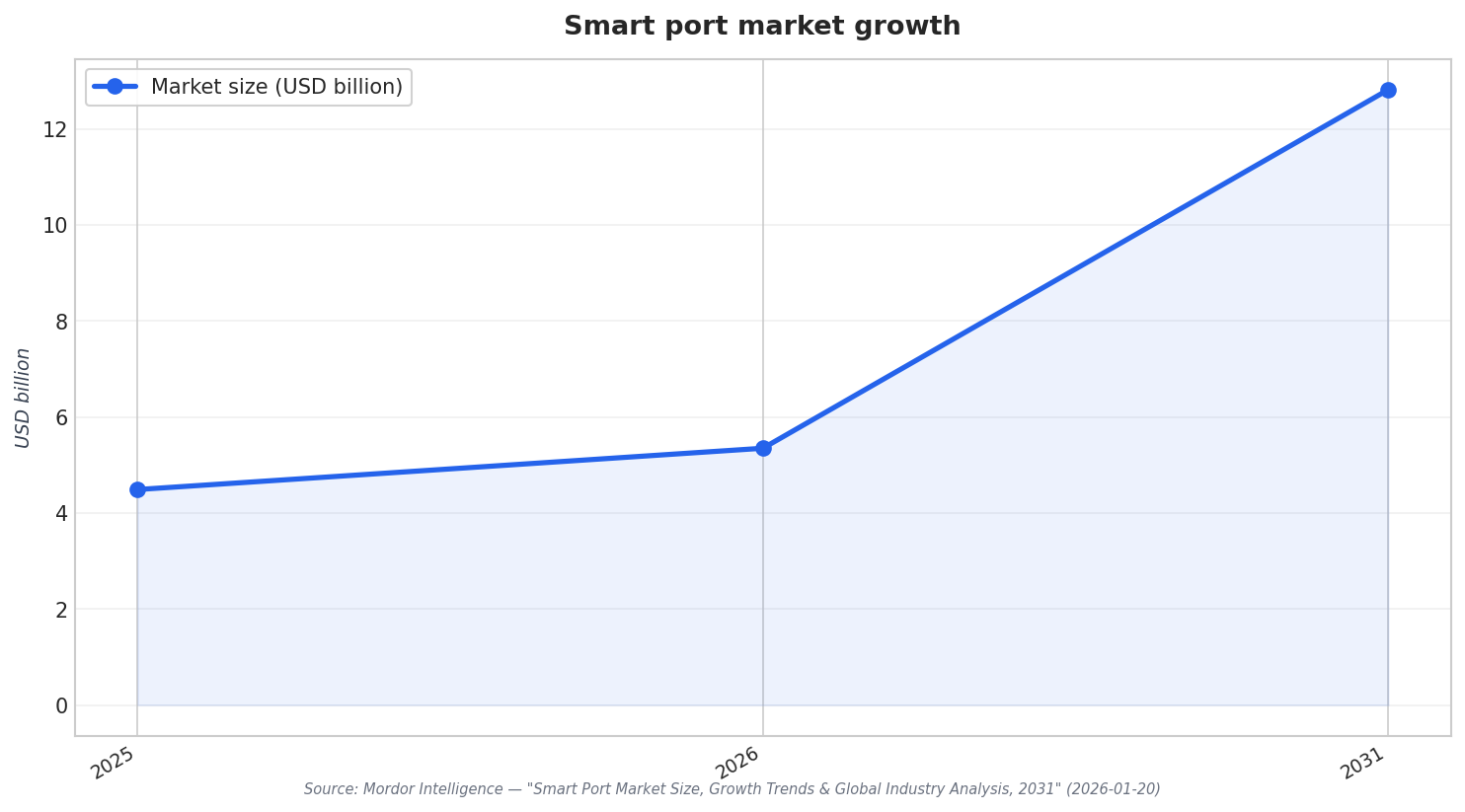
Globally, the smart ports narrative is accelerating, and Singapore’s modernization sits within that wider trend. One global report estimates the smart ports market at US$1.6 billion in 2025, projected to reach US$7.3 billion by 2032 at a 23.6% CAGR, with IoT, AI, blockchain, and data analytics used for vessel traffic management, berth allocation, cargo tracking, and equipment maintenance. Mordor Intelligence separately estimates the smart port market growing from USD 4.49 billion in 2025 to USD 5.35 billion in 2026, reaching USD 12.82 billion by 2031 at a 19.12% CAGR over 2026–2031. For Singapore, the takeaway for 2026 is clear: smart-port capabilities are increasingly the foundation that connects high-volume operations with greener shipping ambitions and future-ready talent.
What makes smart ports a key theme for Singapore Maritime Week 2026?
Which 2024 figures highlight Singapore’s scale as a maritime hub?
How is bunkering linked to greener shipping and digitalization in Singapore?
What market estimates describe the global momentum behind smart ports?