
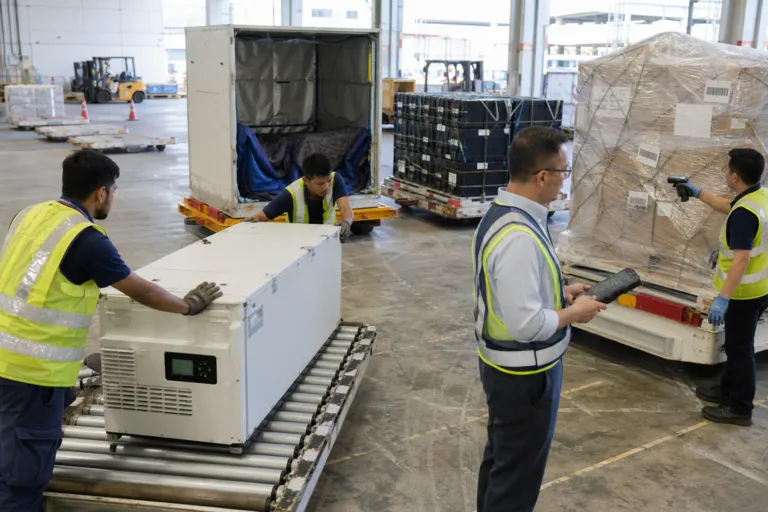
Singapore Changi Airport is positioning its next growth phase around a bigger, more integrated cargo system. In 2024, Changi handled close to 2 million tonnes of freight, a 15% year-on-year increase. In 2025, reported results show cargo demand rising again, with figures cited as 2.1 million tonnes (+4.5%) and 2.08 million tonnes (+4.5%). Against that backdrop, the airport’s stated ambition is to lift air cargo handling capability from the current 3 million tonnes per annum to 5.4 million tonnes per annum, using both facility redevelopment and new industrial capacity to absorb growing volumes across exports, imports, and transhipments.
The plan described by Changi Airport Group leaders combines physical expansion with a tighter operating ecosystem. Terminal 5 is part of the wider Changi East Development and is expected to start operations in the mid-2030s, designed to connect with existing facilities so the airport can run as a single, integrated hub. In parallel, the Changi East Industrial Zone (CEIZ) is being developed for airfreight, air express, and Maintenance, Repair and Operations (MRO) activities, and is also expected to be operational from the mid-2030s. Once CEIZ opens, Changi plans to redevelop the Changi Airfreight Centre, with CAG noting the site’s facilities were built back in the 1980s.
What Will Actually Change on the Ground for Shippers
Today’s cargo base at Changi includes the approximately 70-ha Changi Airfreight Centre, a free trade zone that houses ground handling terminals operated by SATS and dnata, plus facilities run by FedEx, UPS, SF Express, and DHL. The centre also includes five Changi Airport-owned and operated multi-tenant warehouse buildings, which house about 170 freight forwarders, alongside transportation companies. The infrastructure roadmap adds CEIZ and, separately, the Singapore government’s plans for Airport Logistics Park of Singapore 2 (ALPS2), to be operated by government agency JTC and built from approximately 2030 to further support logistics operations. ALPS1 already includes facilities run by DHL Global Forwarding, UPS Healthcare, and the former Schenker, now owned by DSV.
Demand signals are coming from sectors where speed, reliability, and handling standards matter. Changi attributed 2025 cargo growth to front-loading of activities in the first three quarters and “strong global semiconductor demand” tied to AI, electric vehicles, and cleantech growth. Another driver highlighted in the sources is pharmaceuticals. Singapore is cited as already handling over 375,000 tonnes of temperature-sensitive cargo annually, reinforcing the need for state-of-the-art temperature-controlled facilities. The result is a cargo expansion narrative that is not only about volume, but about the mix of high-value and time-sensitive shipments that can pressure bottlenecks if capacity and processes do not scale together.
Digitalisation is positioned as a practical lever alongside construction. Since 2020, the Changi Air Cargo Community System has addressed operational pain points, including landside movements through the Truck Dock Slot Booking (TDSB) system. The sources note that 90% of export cargo currently uses TDSB, and that it can reduce congestion and driver waiting times by up to 30% for those who book slots. In that context, the Changi air cargo expansion 2026 story is as much about making throughput more predictable as it is about reaching a larger headline capacity number, especially as new zones and remodelled facilities connect into a single system.
How much cargo did Changi handle in 2024, and how fast did it grow?
What do the 2025 cargo figures say about demand at Changi?
What capacity target sits behind Changi’s expansion plans?
How does the Changi air cargo expansion 2026 connect to pharma and chip shipments?
Which digital tool is highlighted for reducing landside congestion at Changi?